
PRESENTS
ARGELIA MATUS
WHERE THE FLOWERS GROW
Where the flowers grow
I, Moon, want to tell you about a tree that bears fruit as round as I am.
It grows on the Isthmus of Tehuantepec, near the sea, and people call it morro. Its fruits are the jícaras, and they have been in that land’s kitchens for centuries: for drinking water, for serving food, for measuring maize. From up here I have watched them pass from hand to hand, from grandmothers to mothers and from mothers to daughters.
In one of those houses a girl grew up. She drank from the jícaras without giving them much thought, the way you use whatever has always been there. When she was older she left for the city of Oaxaca to study painting, and she learned to look slowly: at thread, at hands, at flowers, at the night, at the sea.
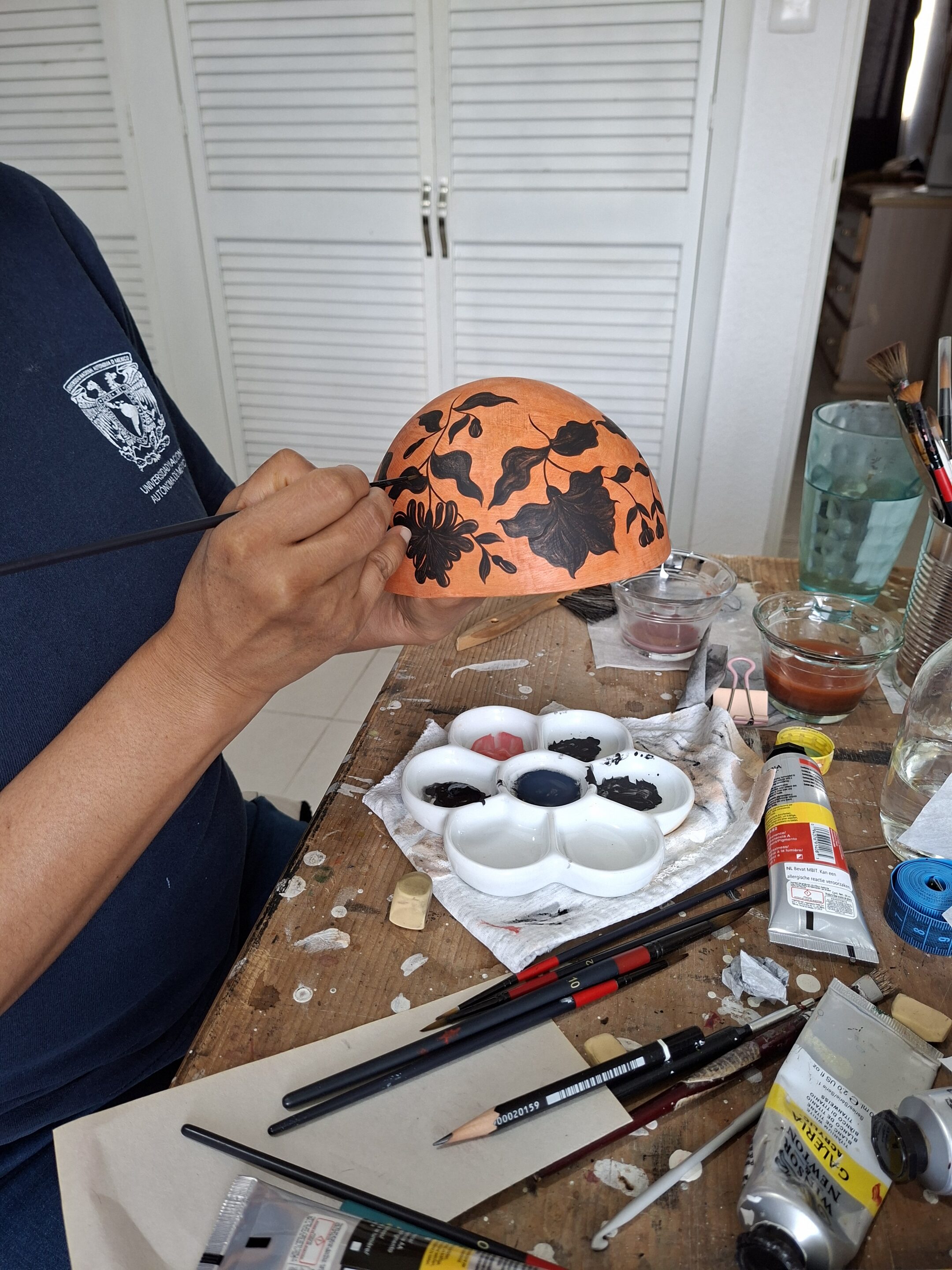
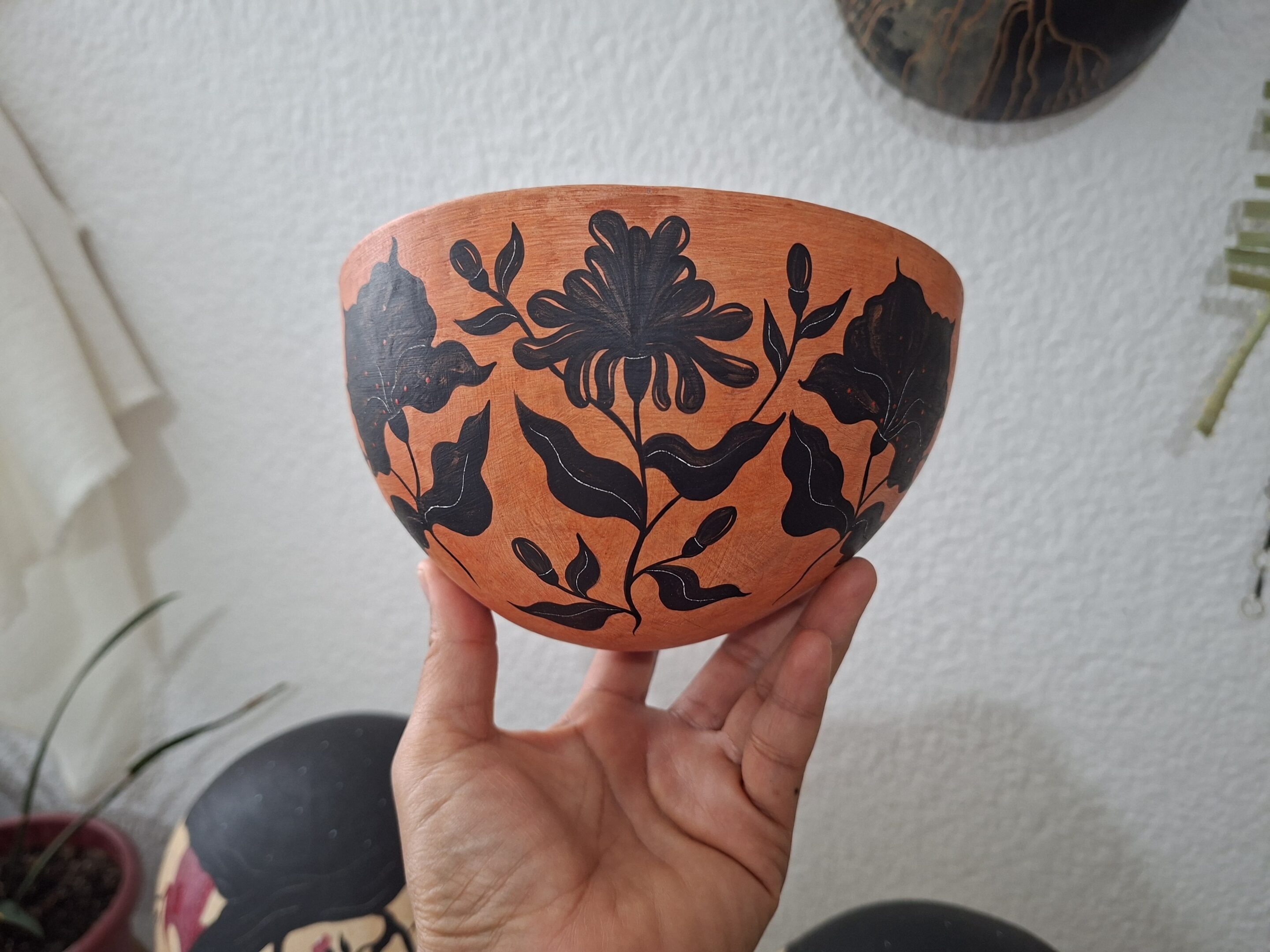
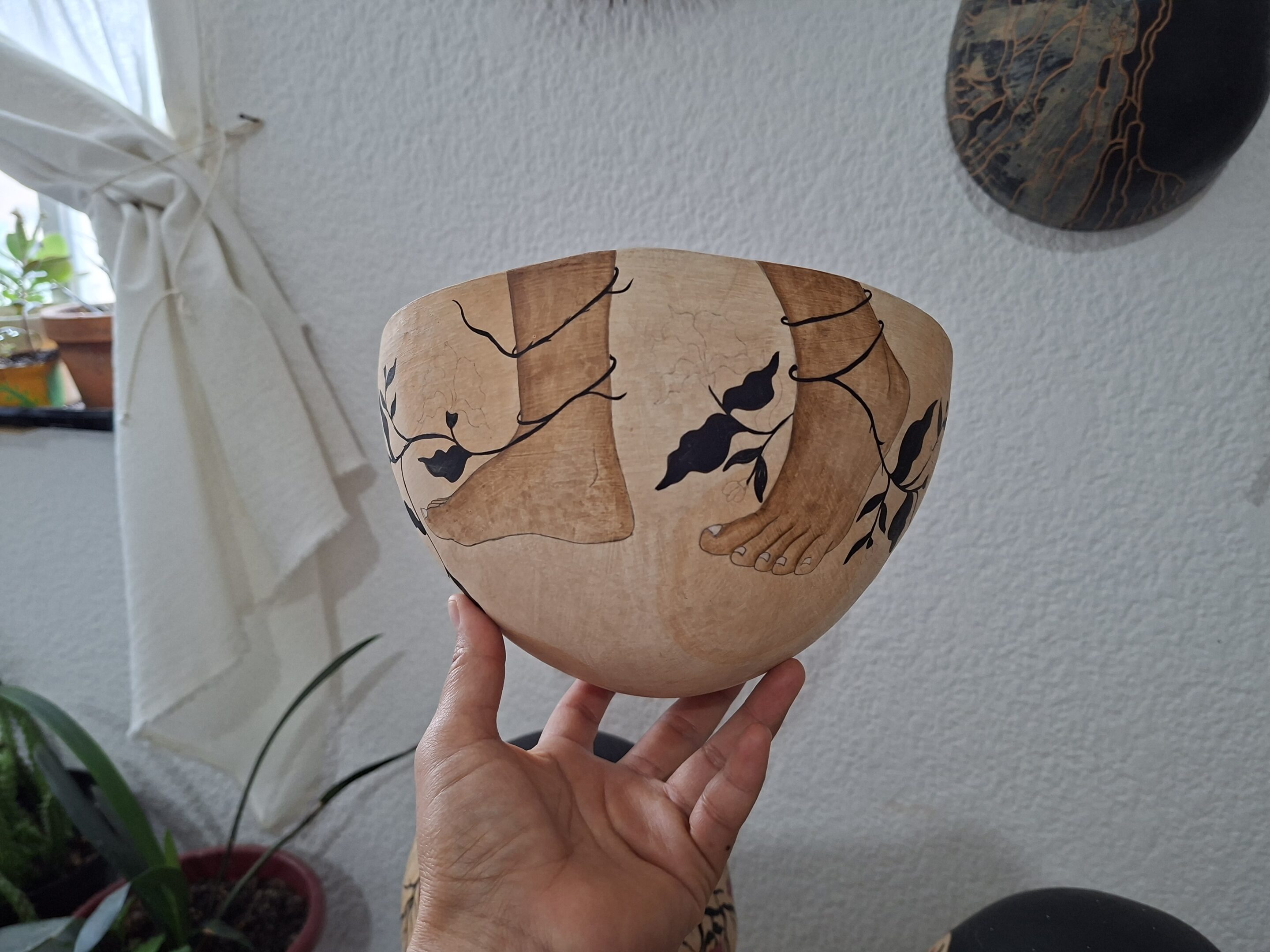
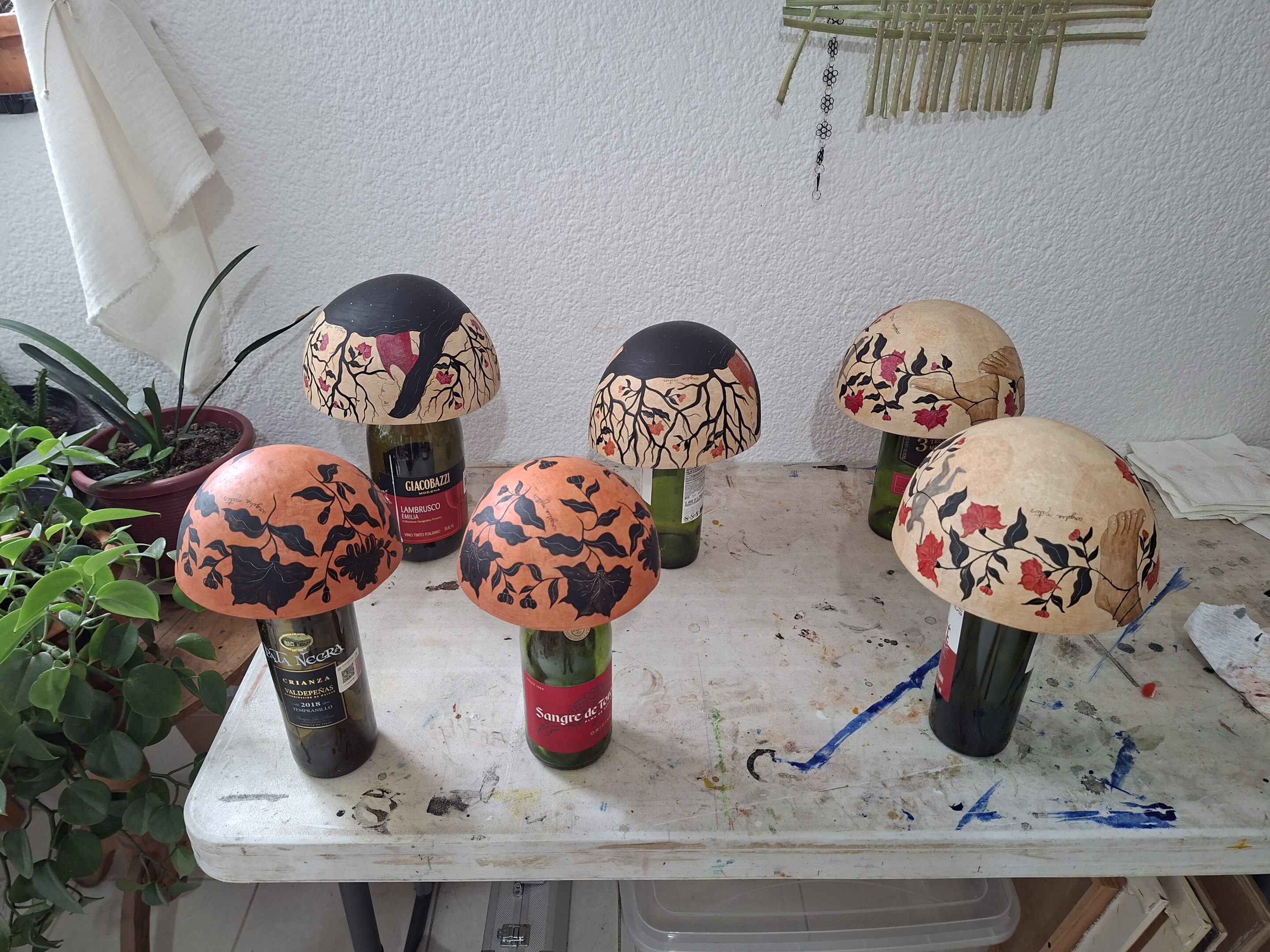
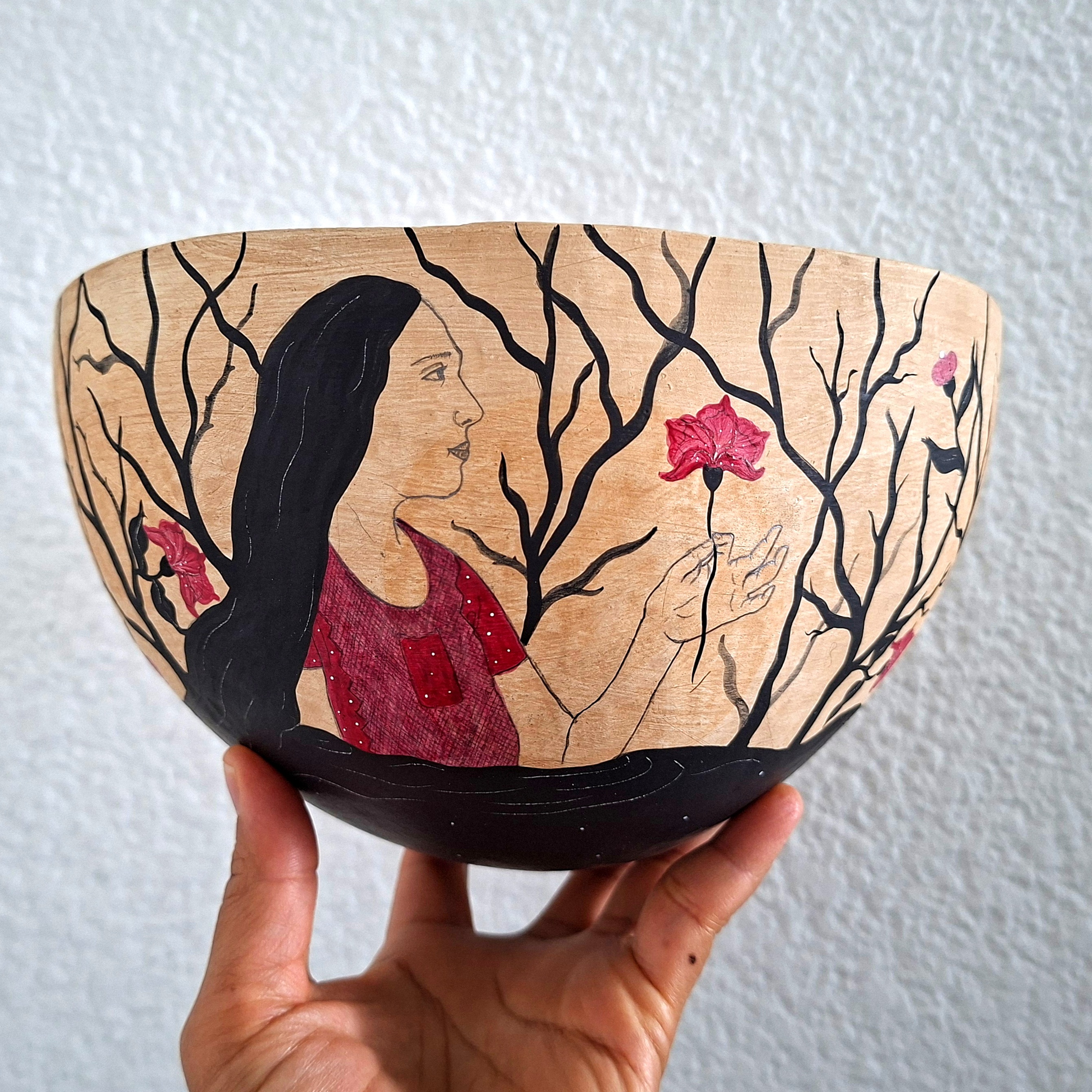
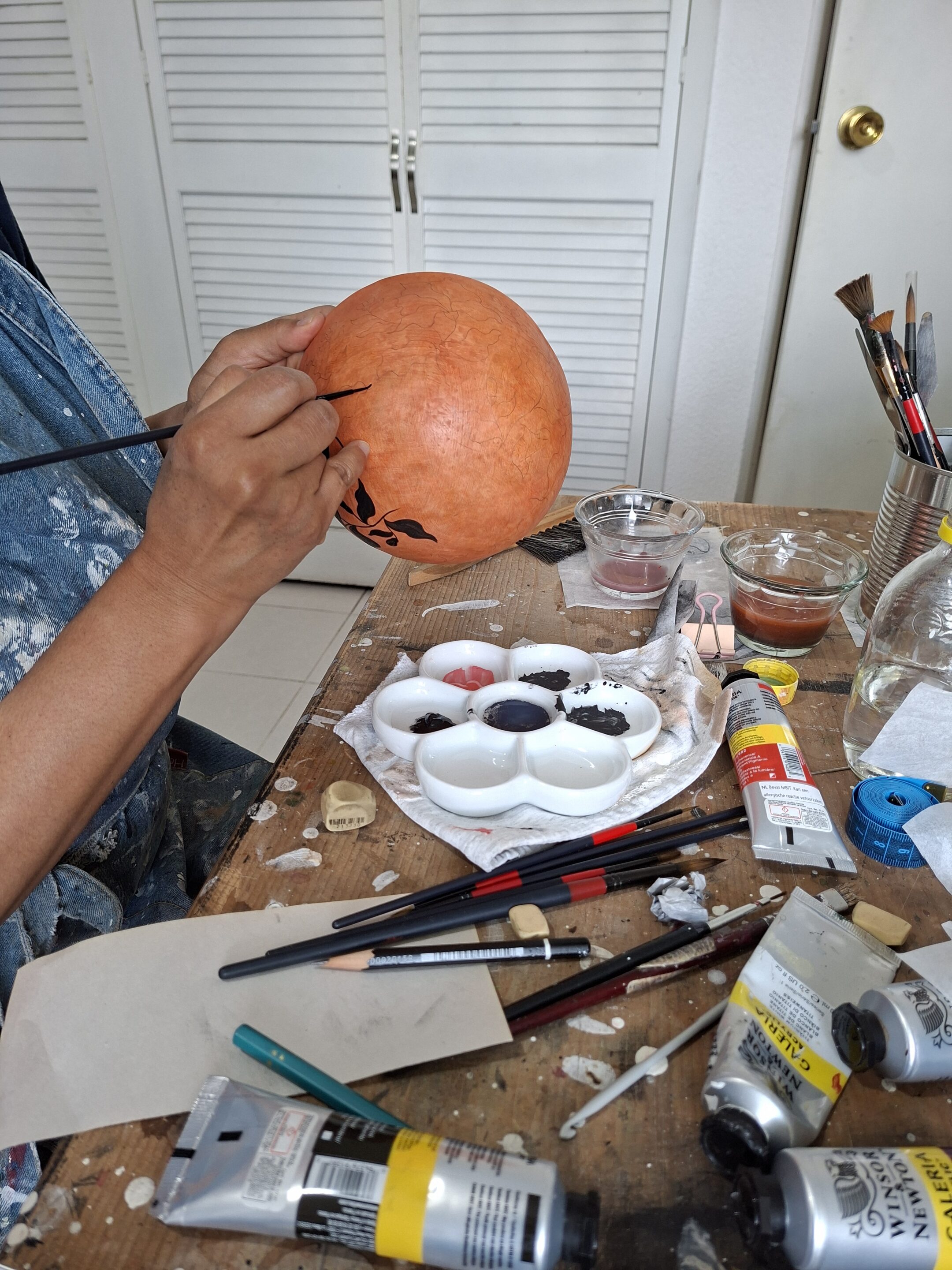
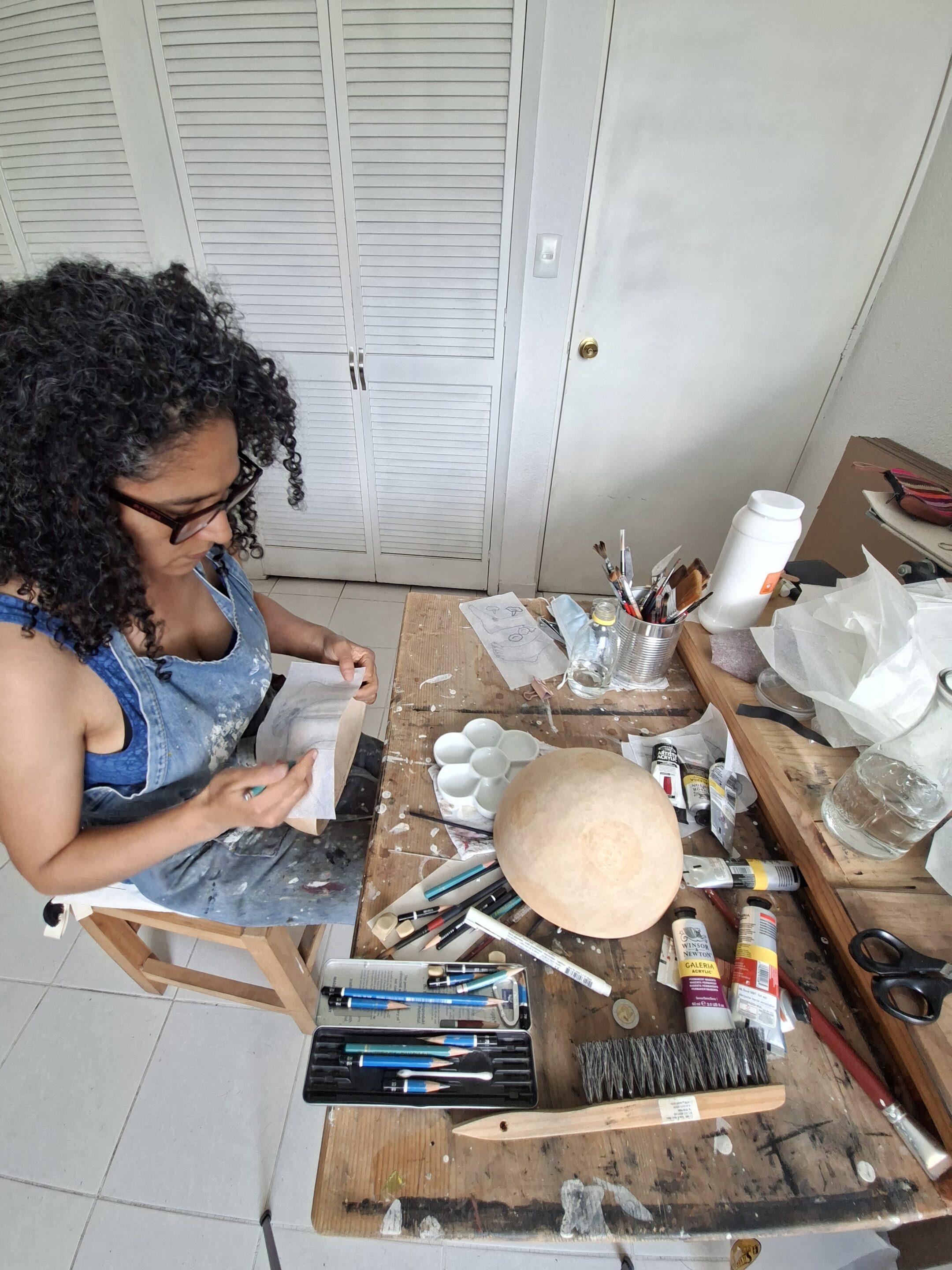
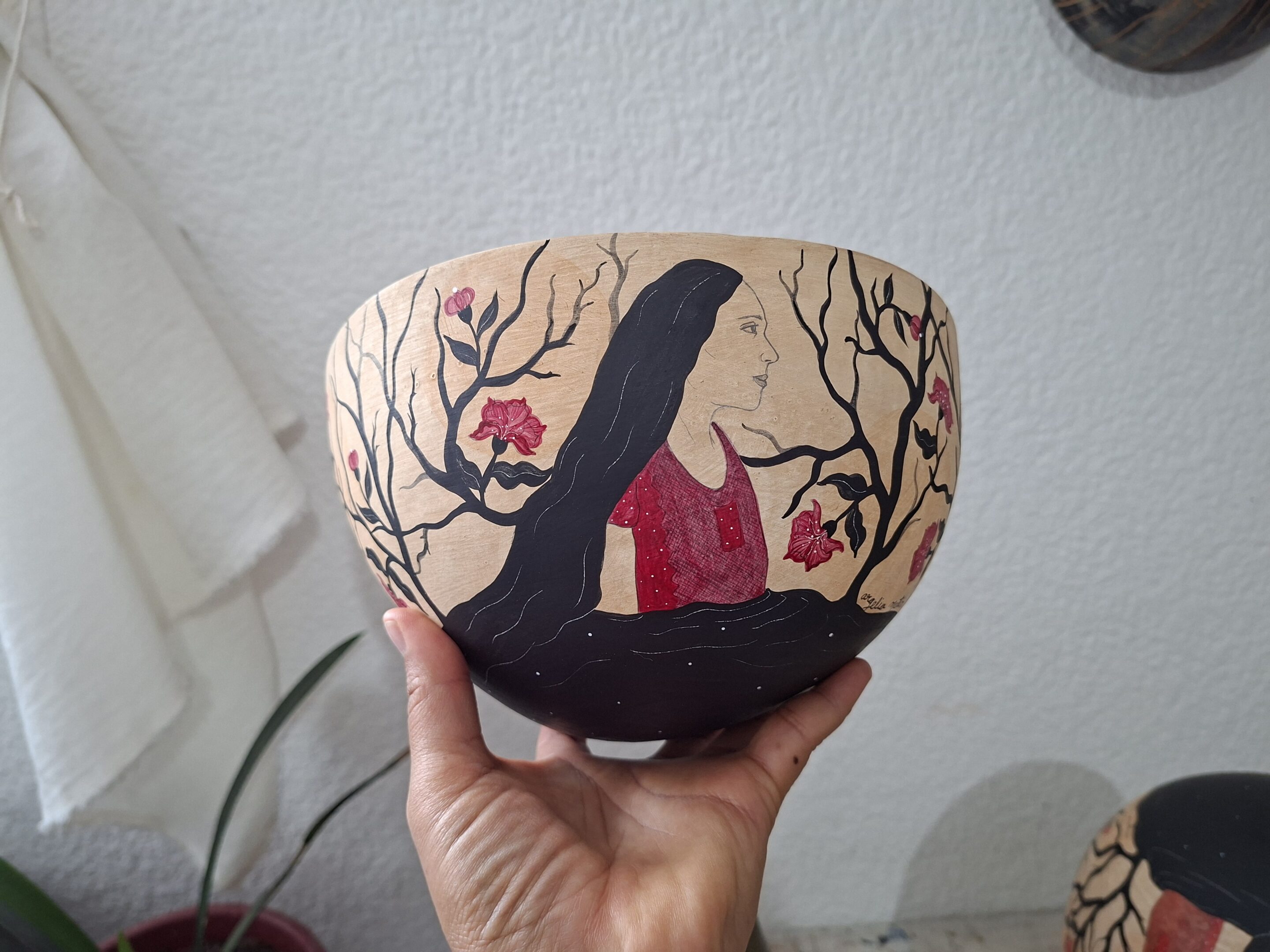
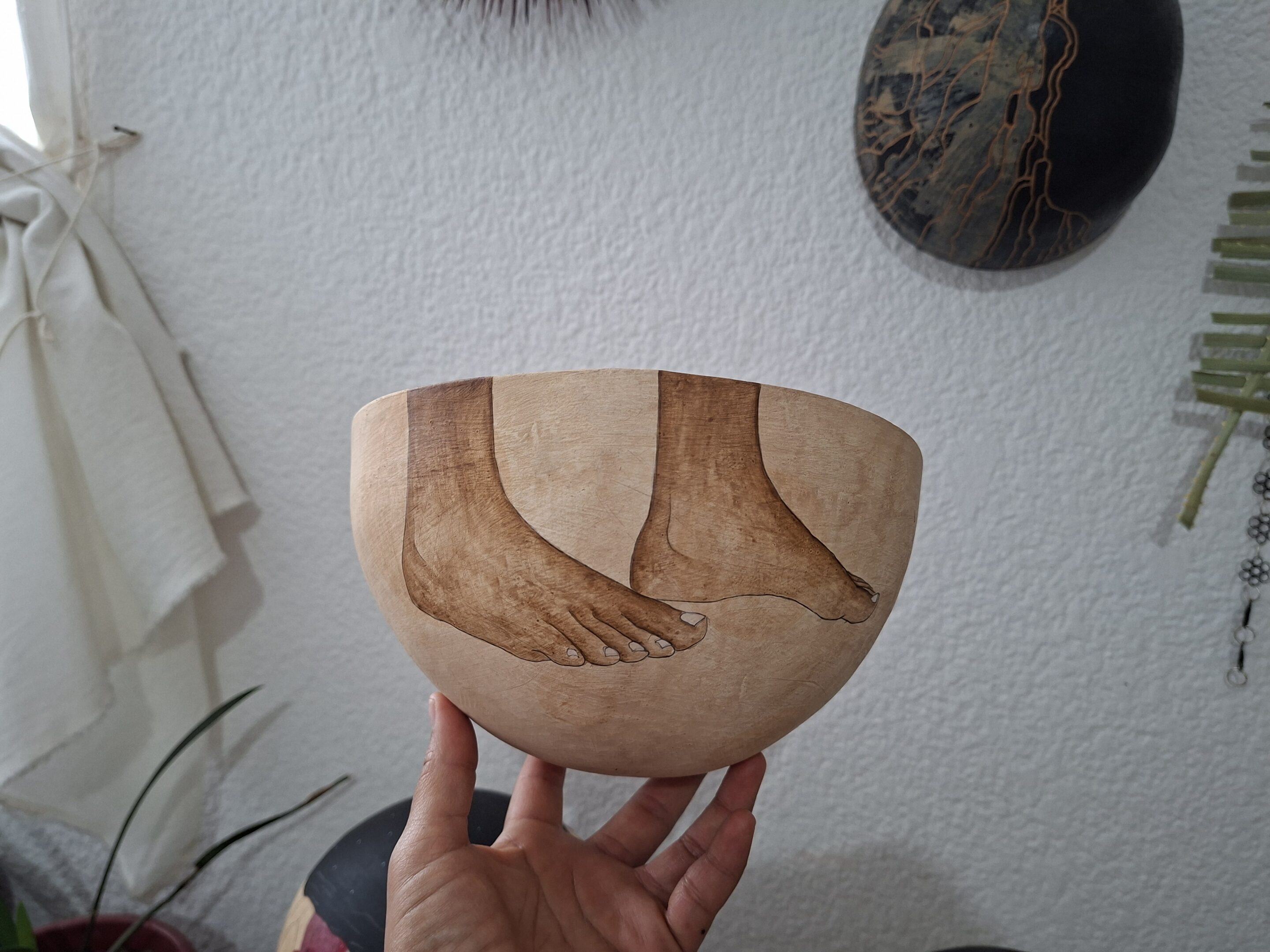
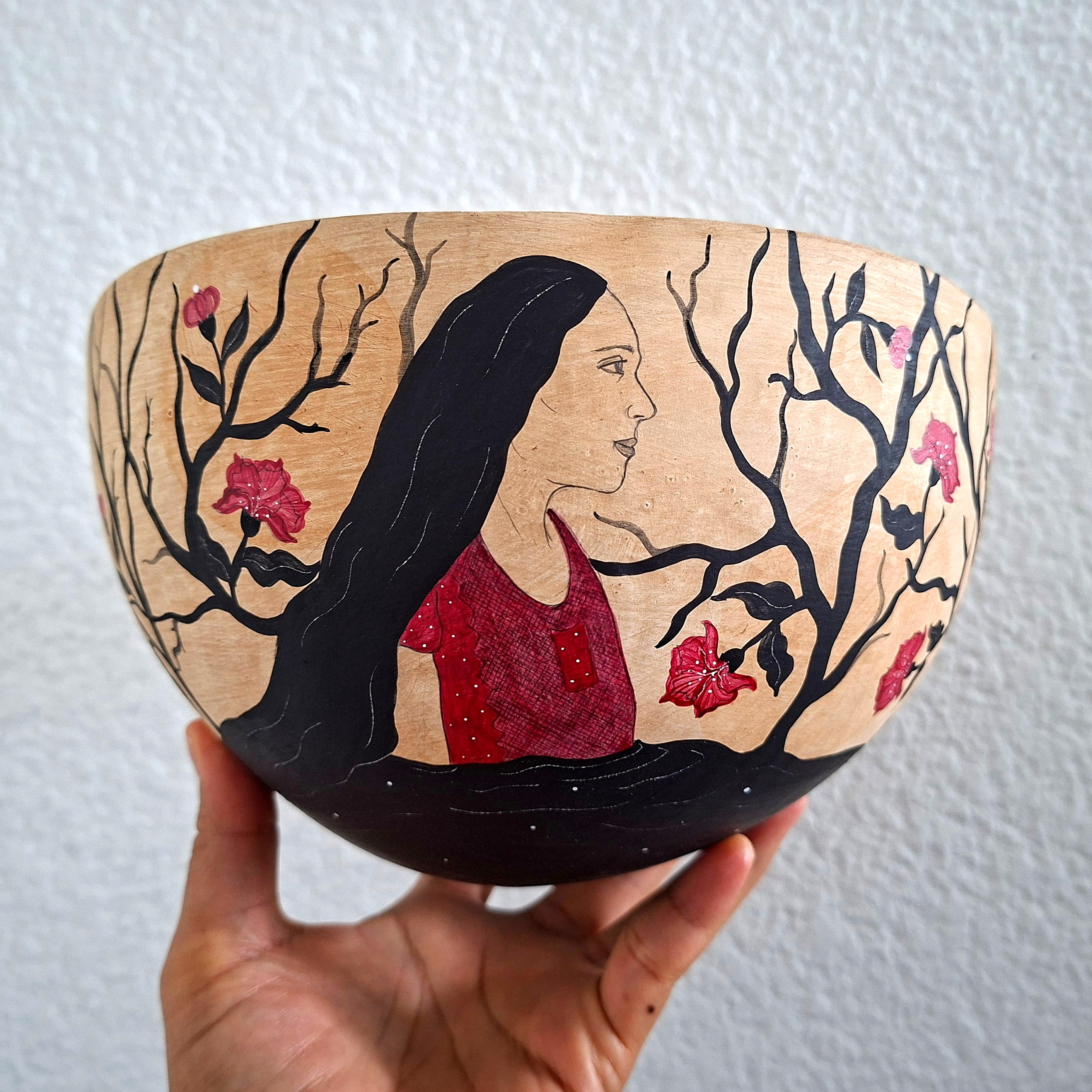
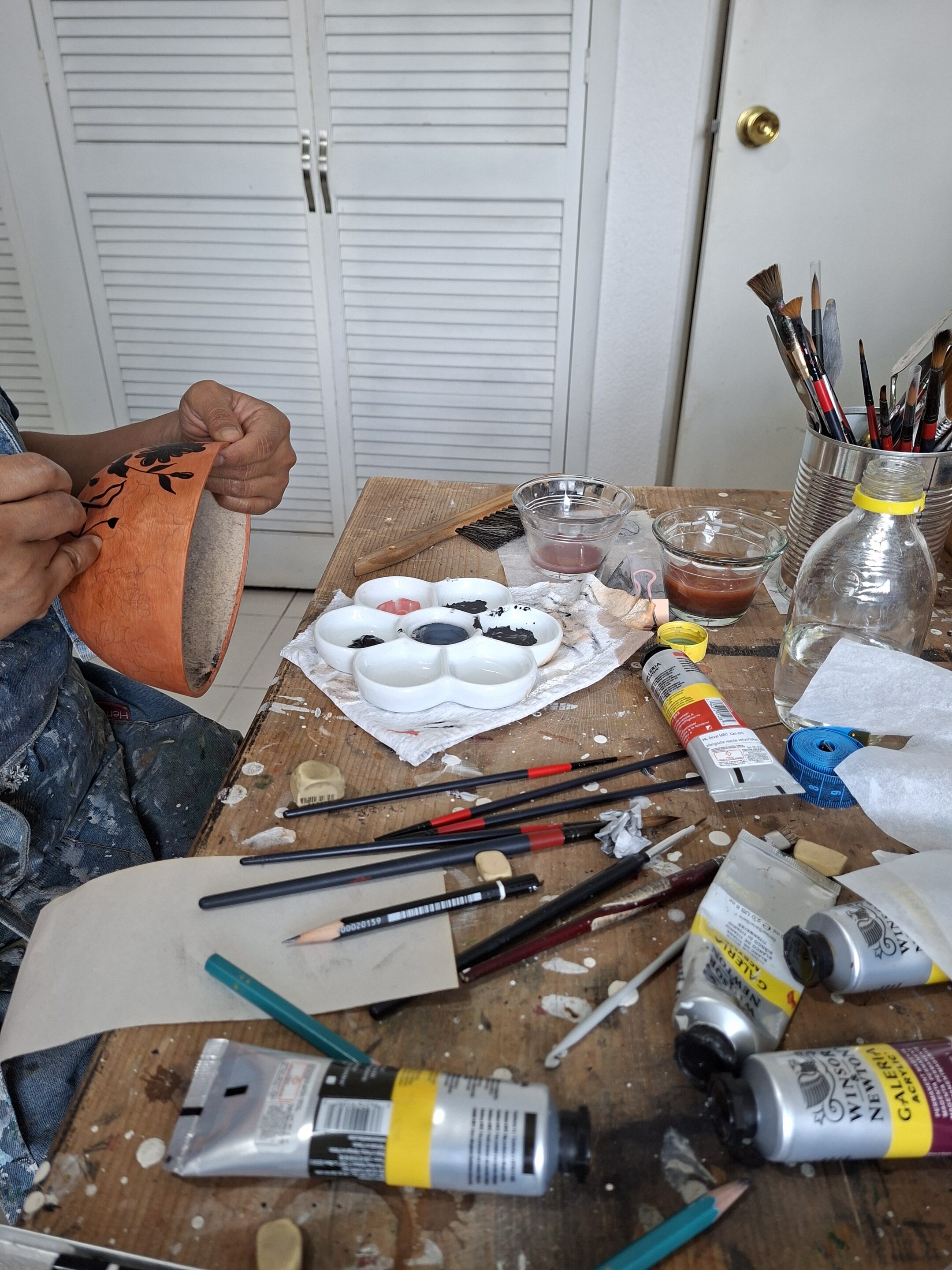
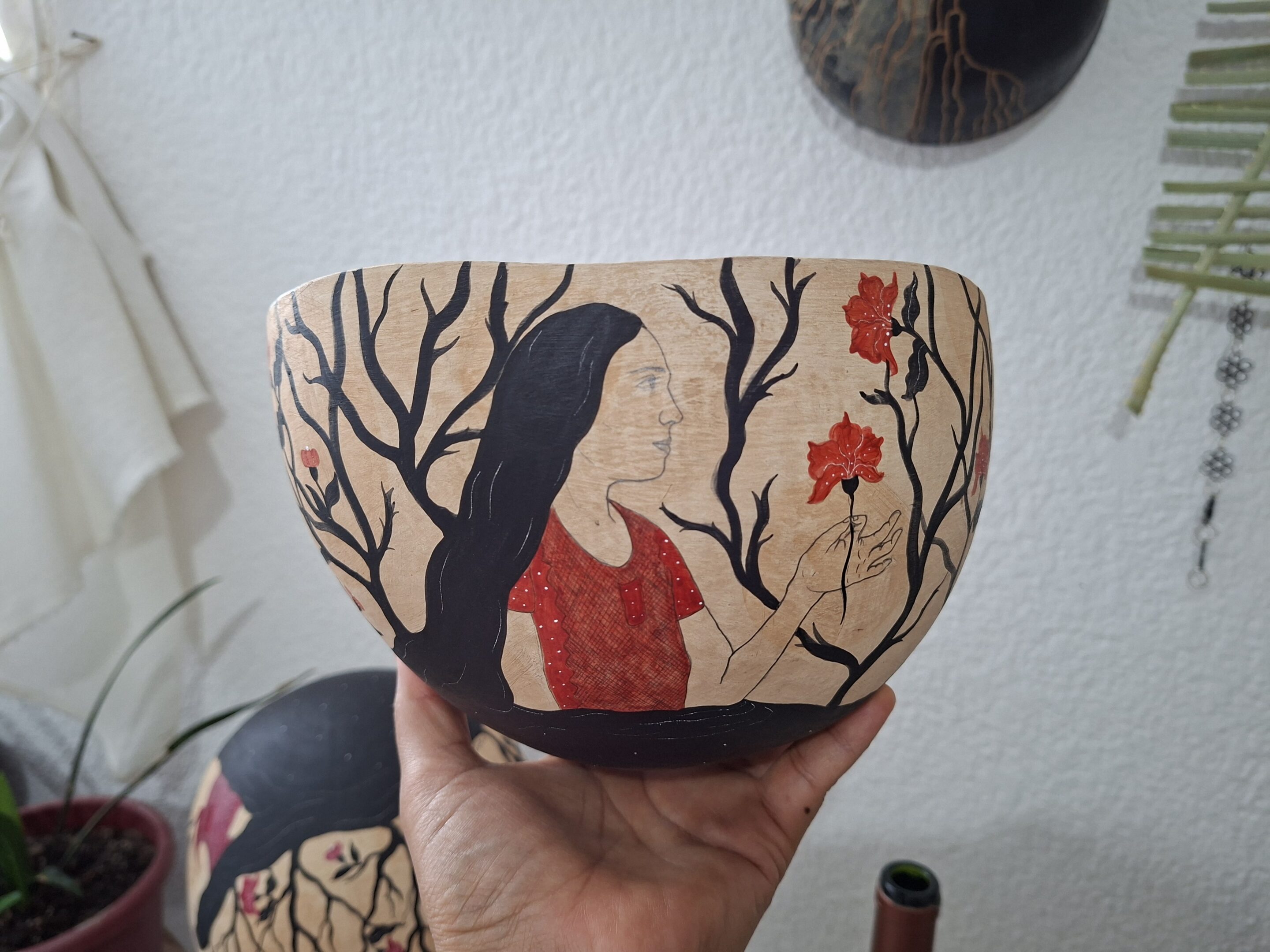
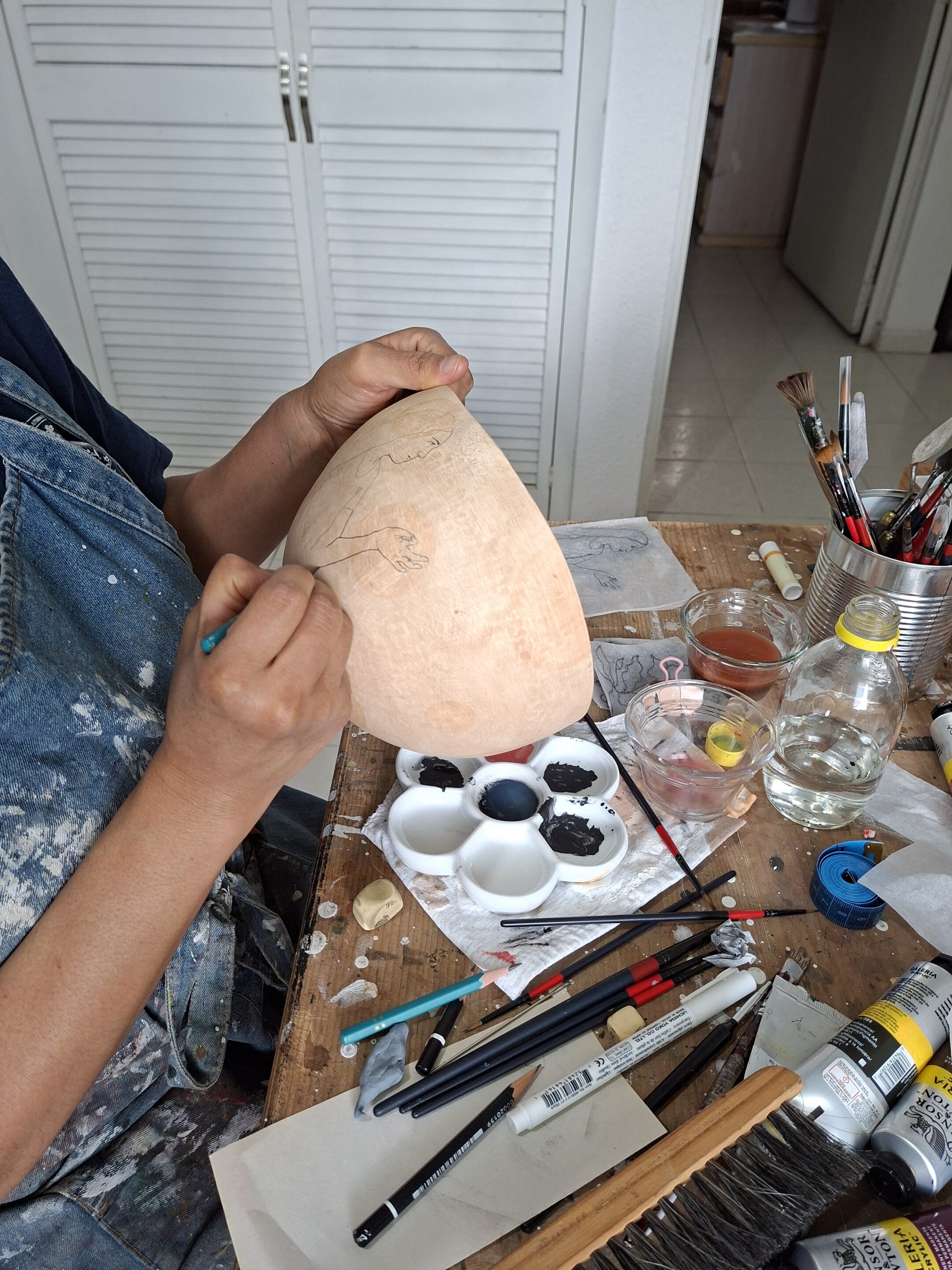
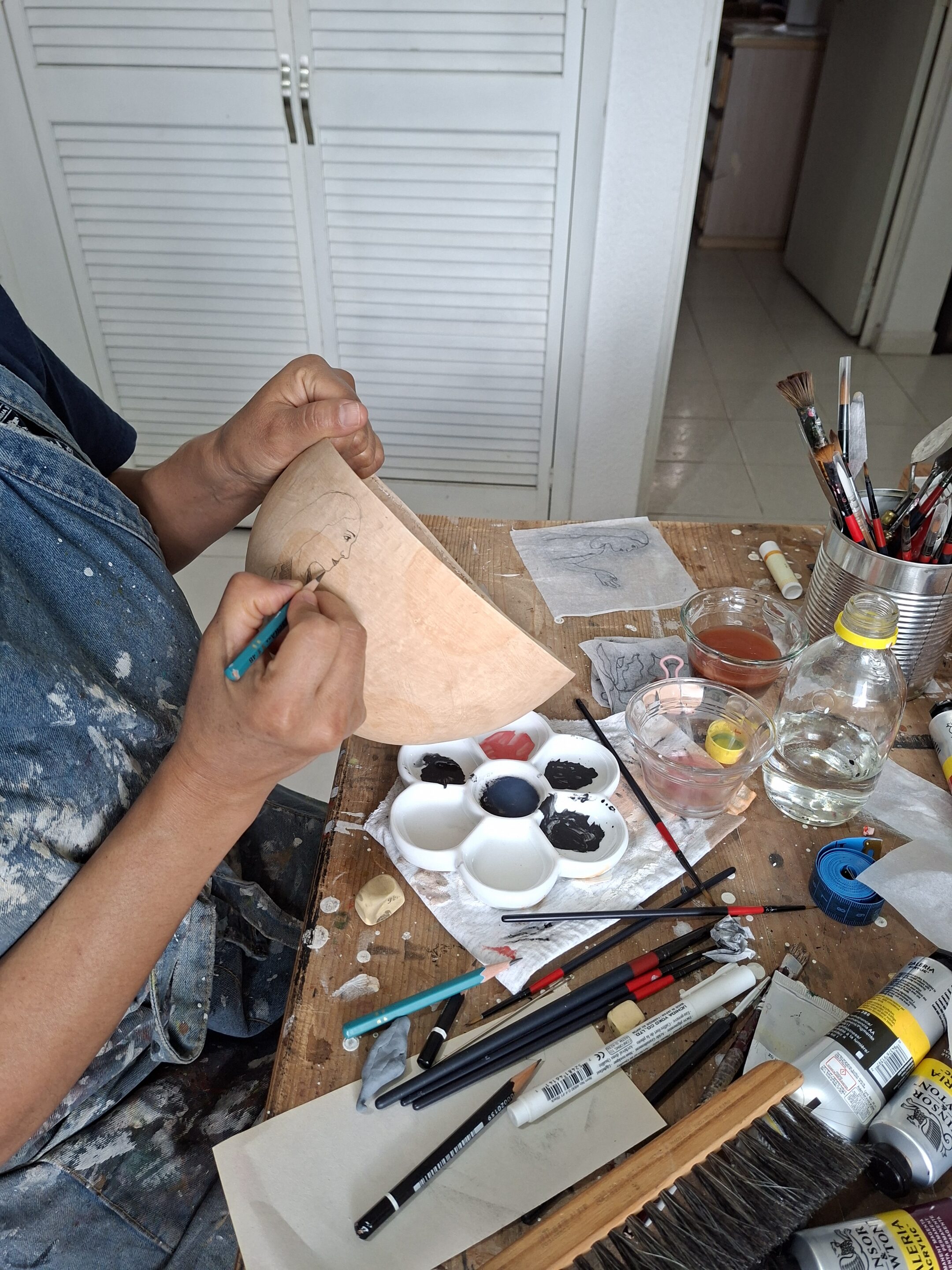
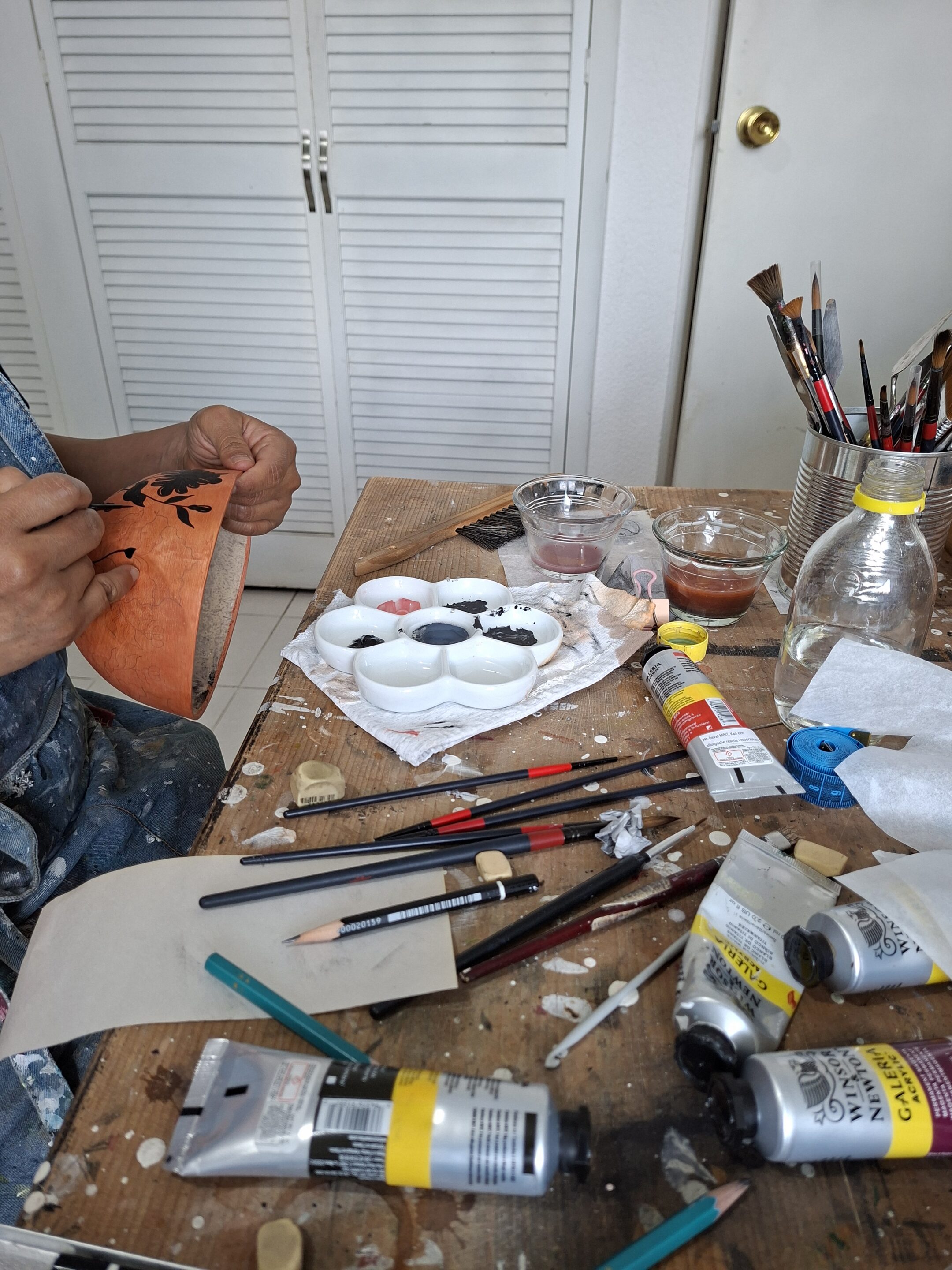
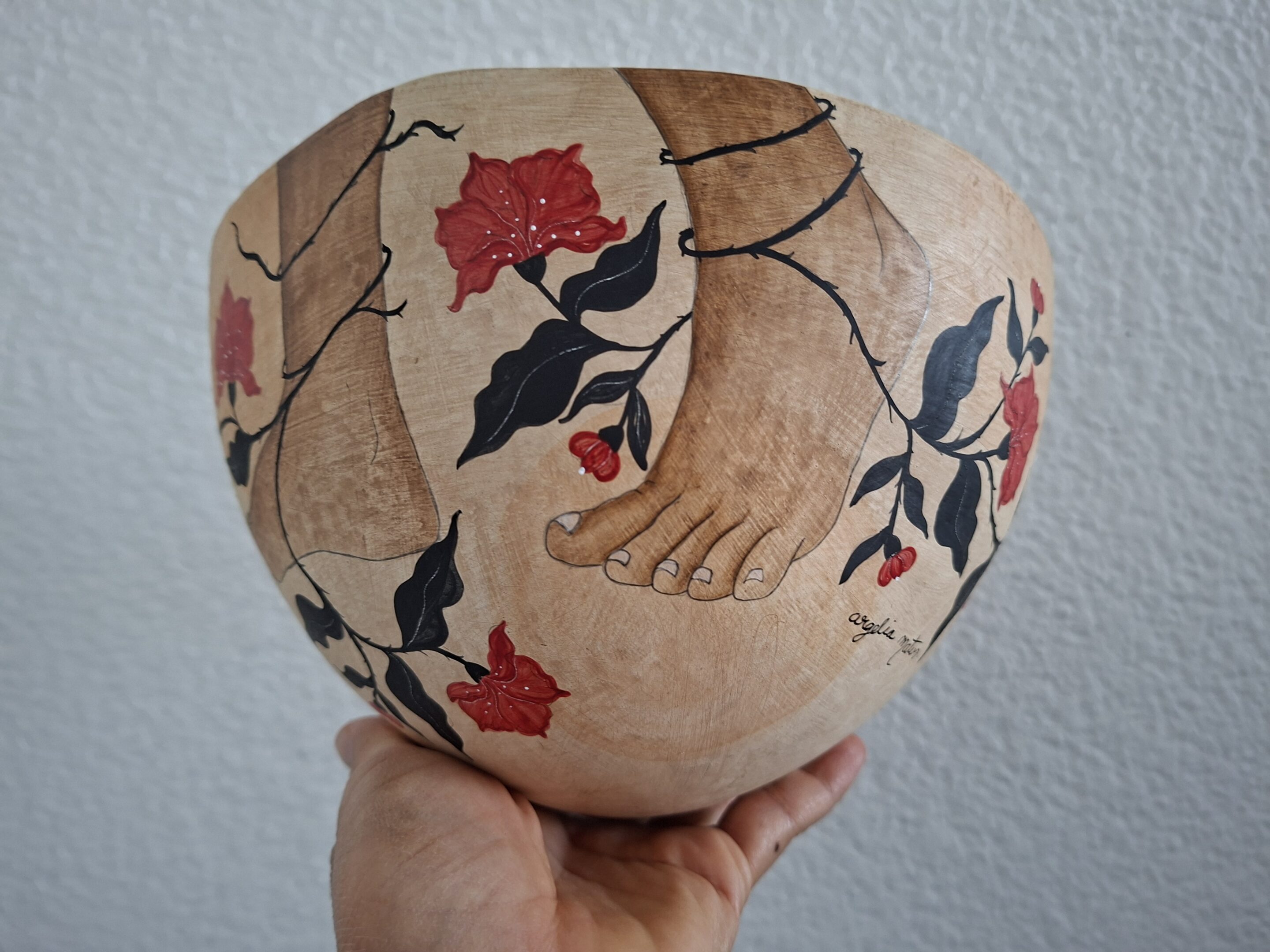
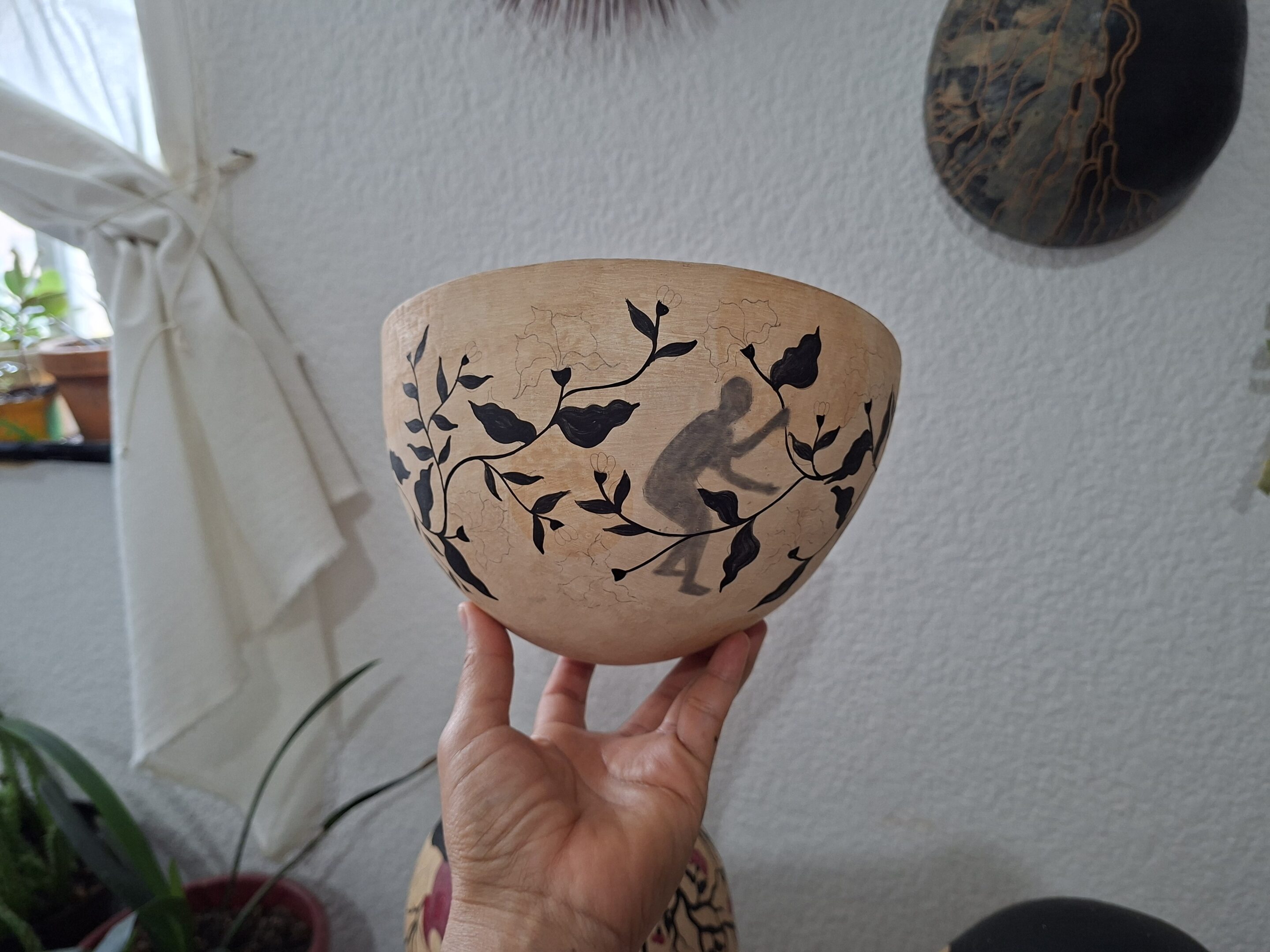
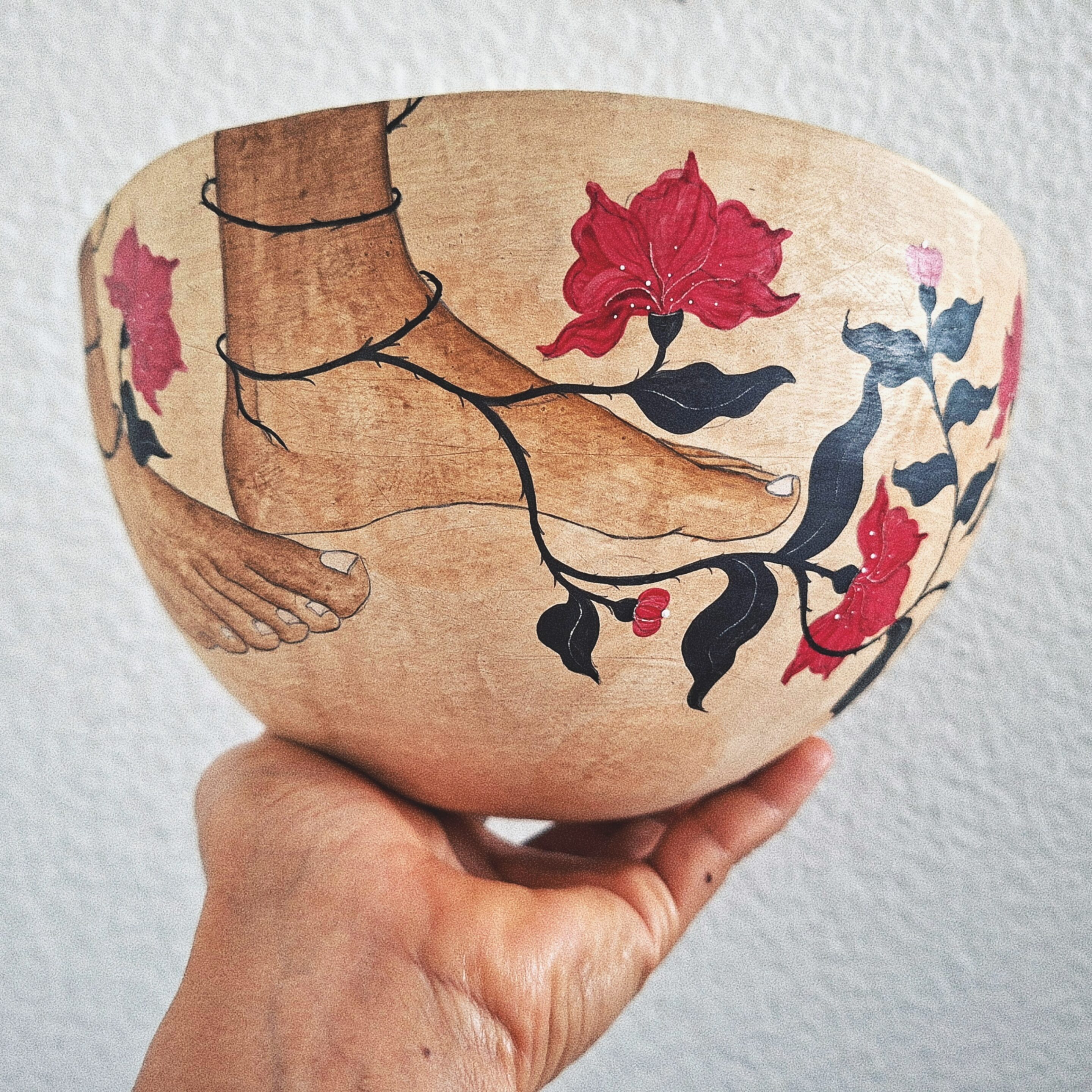
One night I saw her come back to the jícaras. She painted them quietly, by lamplight: black flowers, long-haired women among the branches of a forest, bare feet walking through flowers.
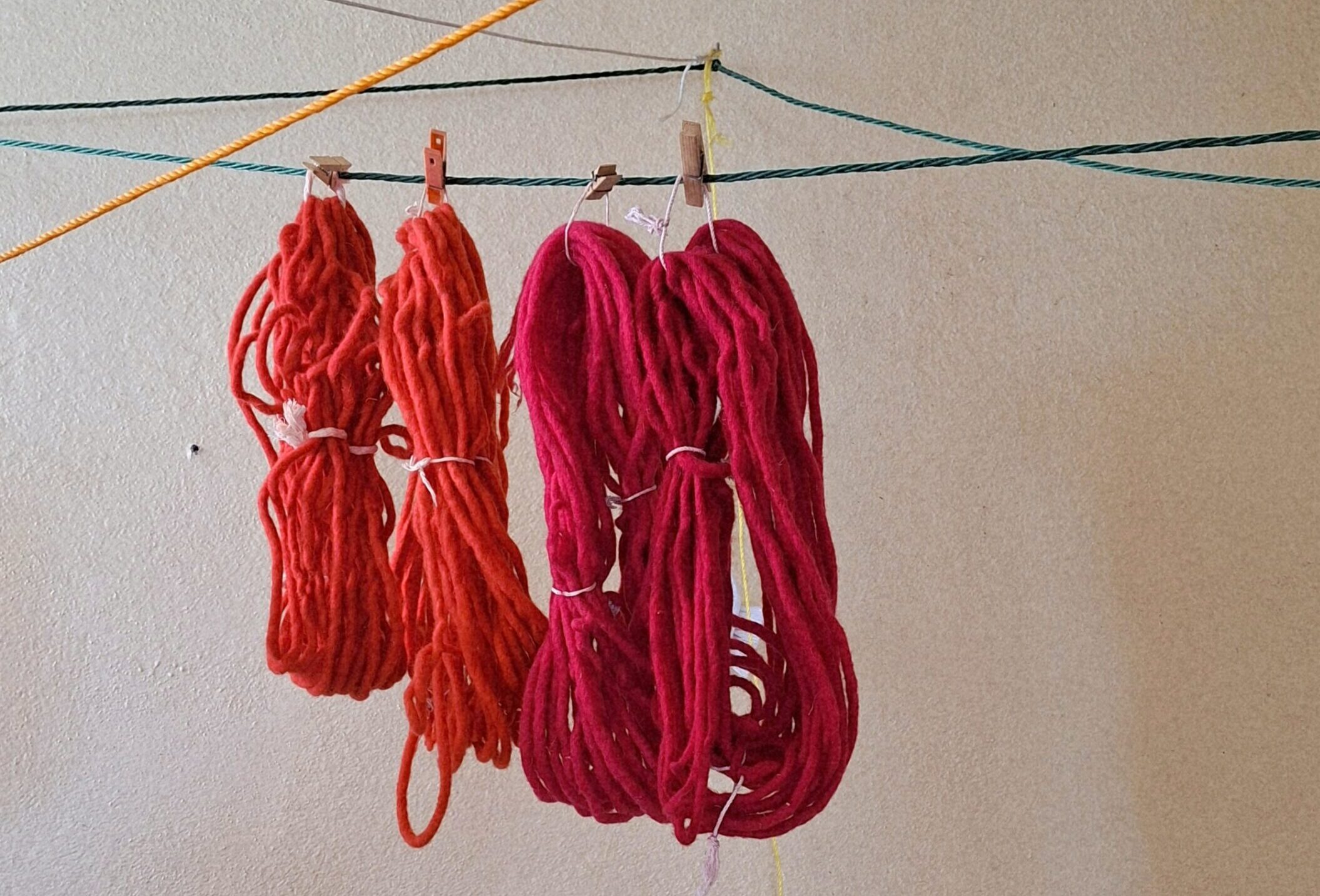
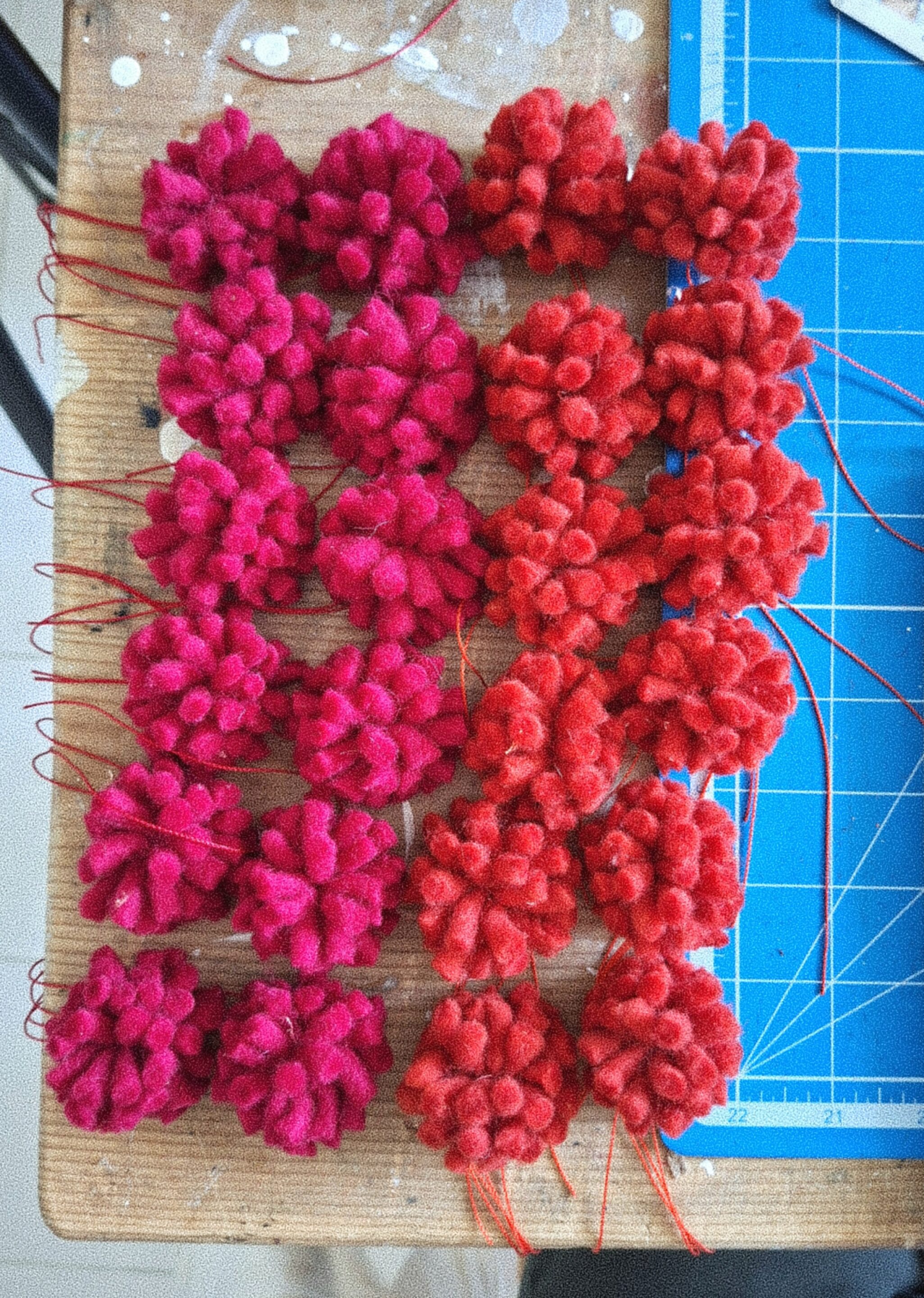
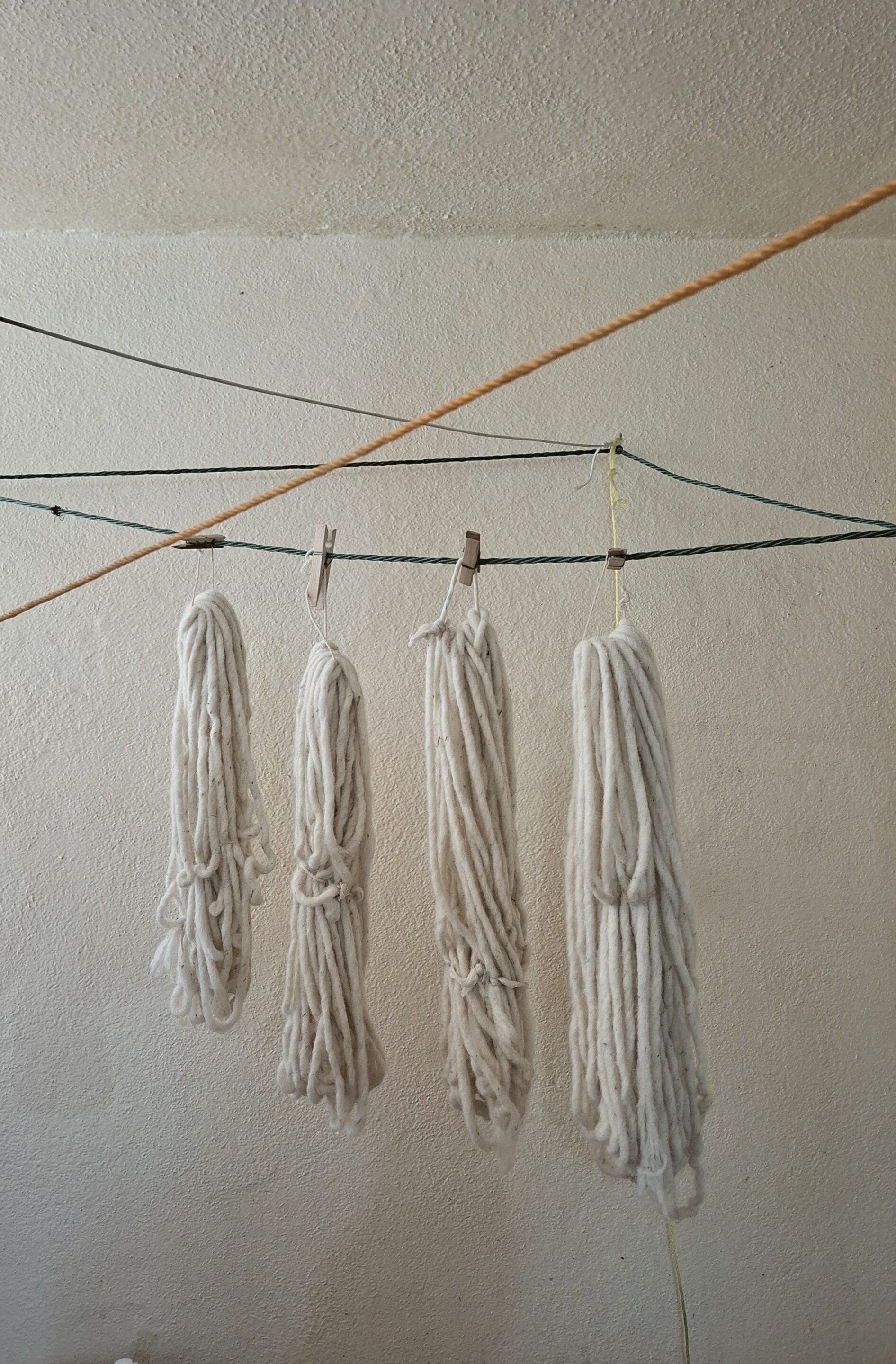
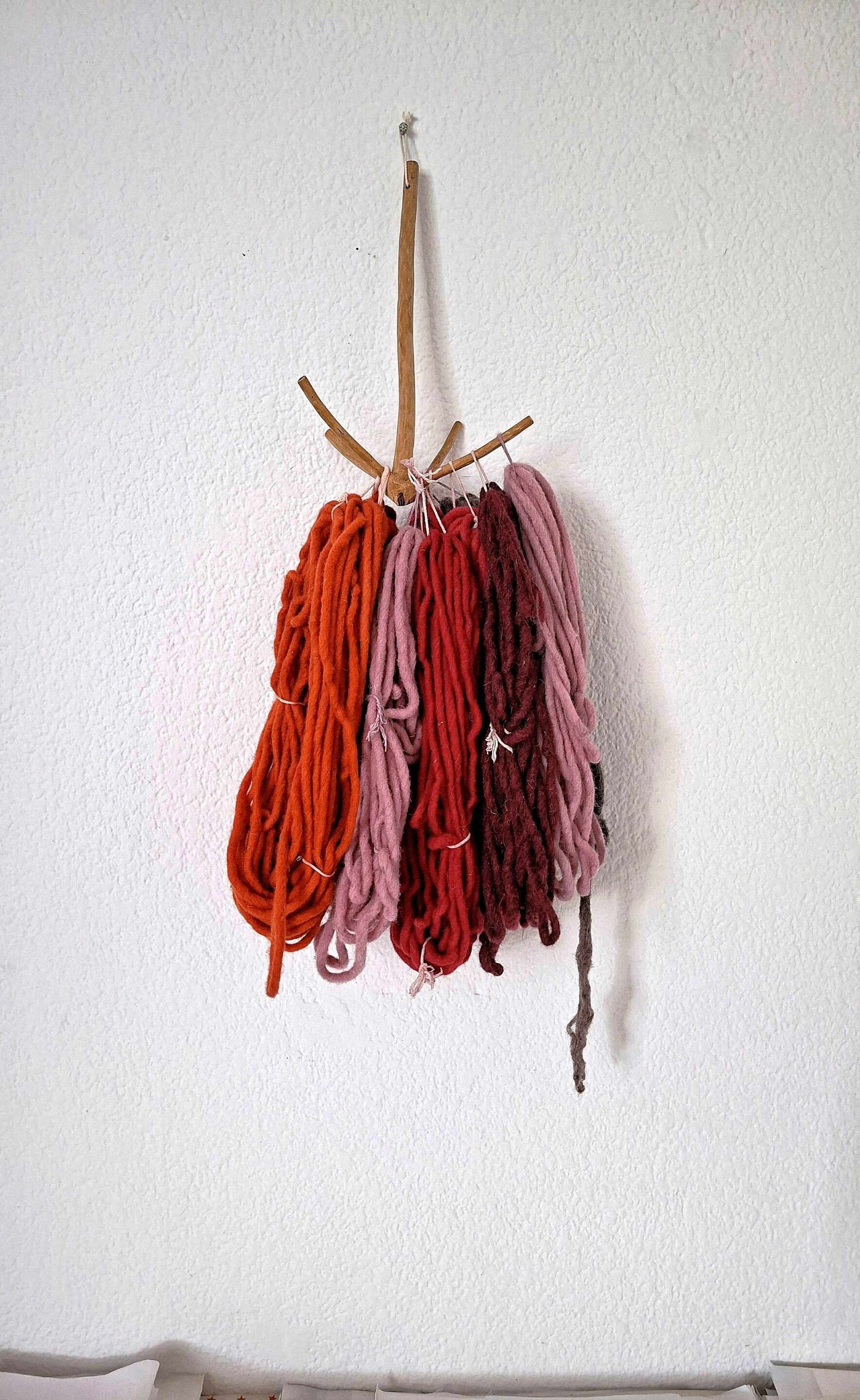
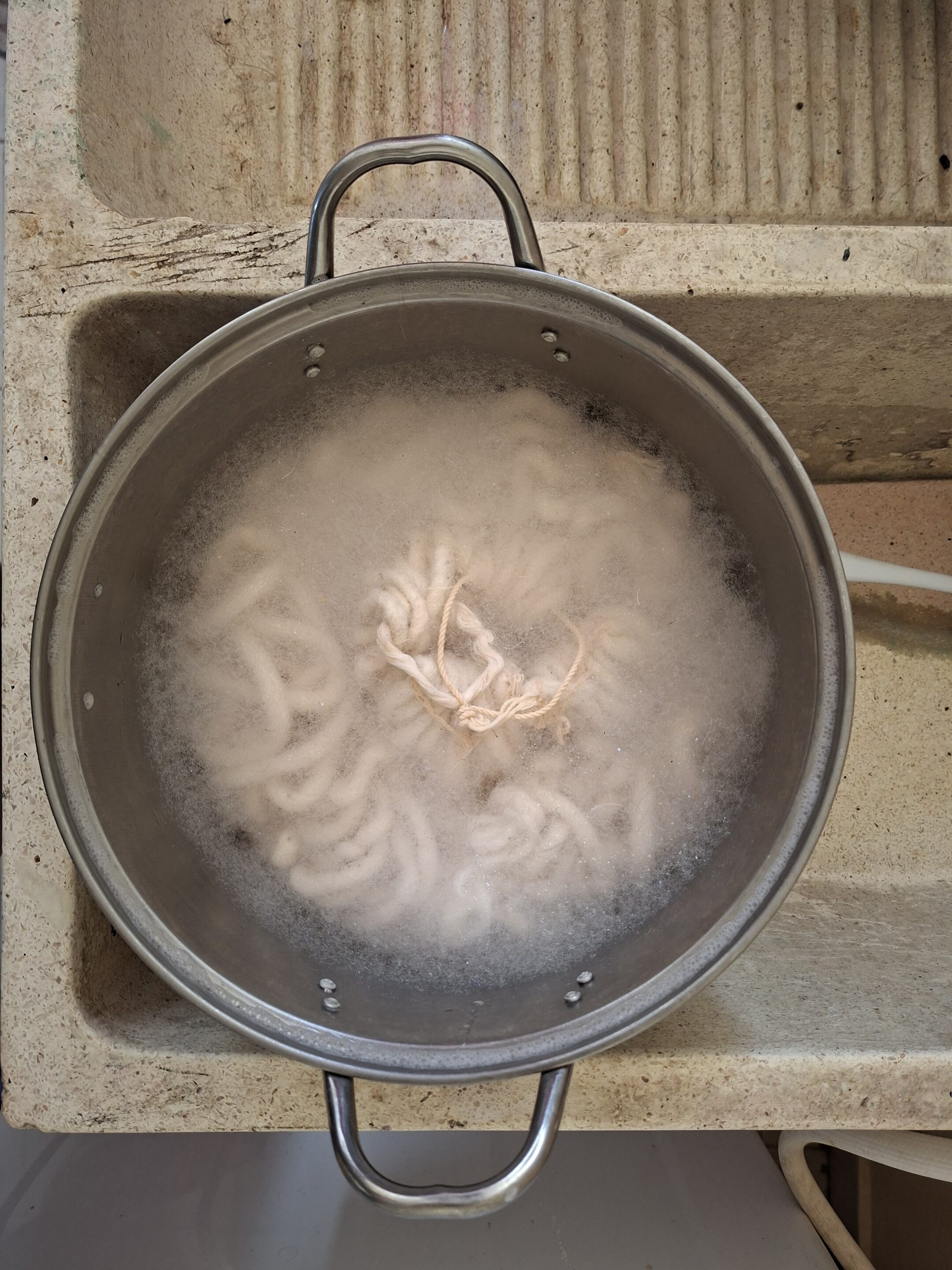
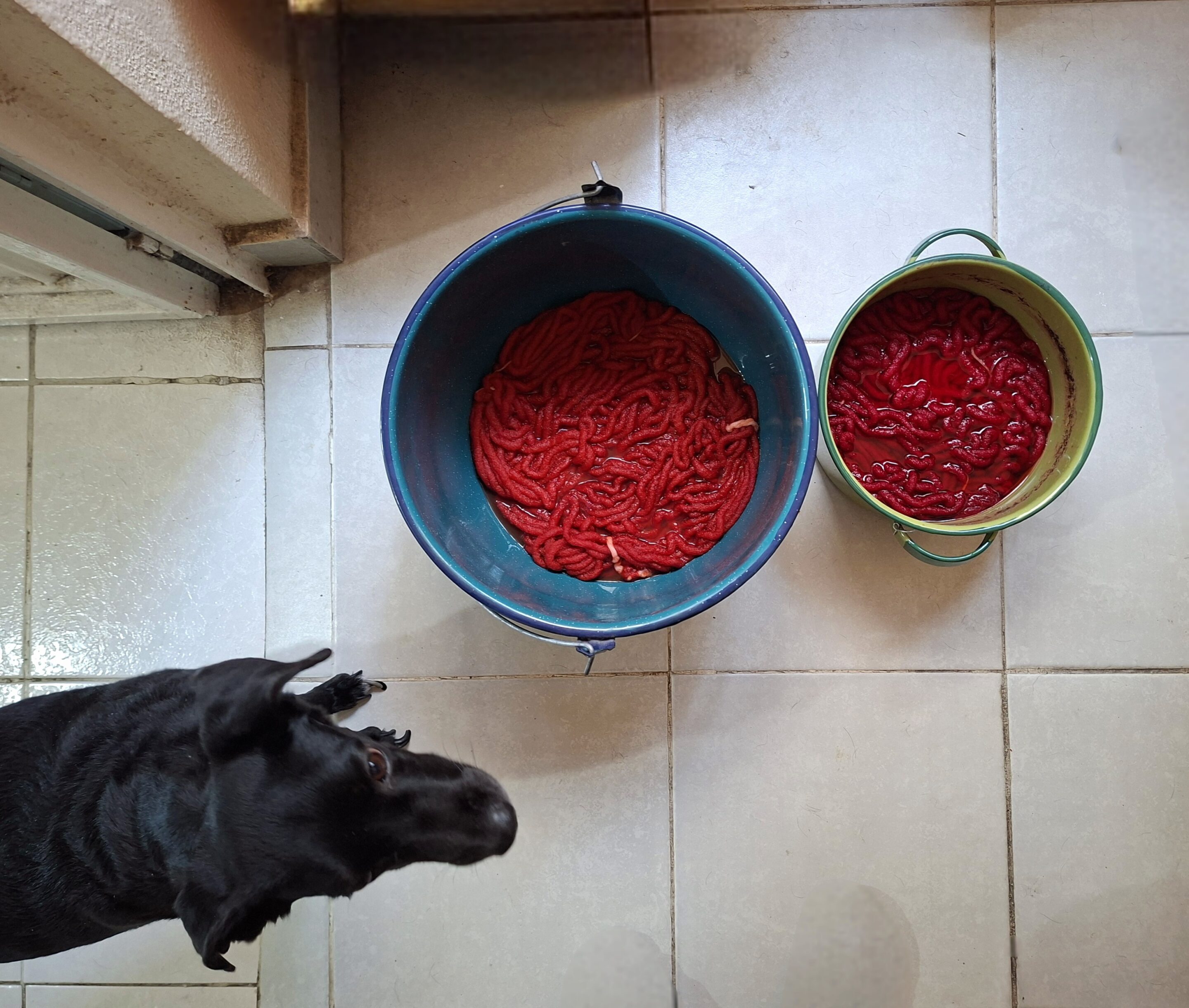
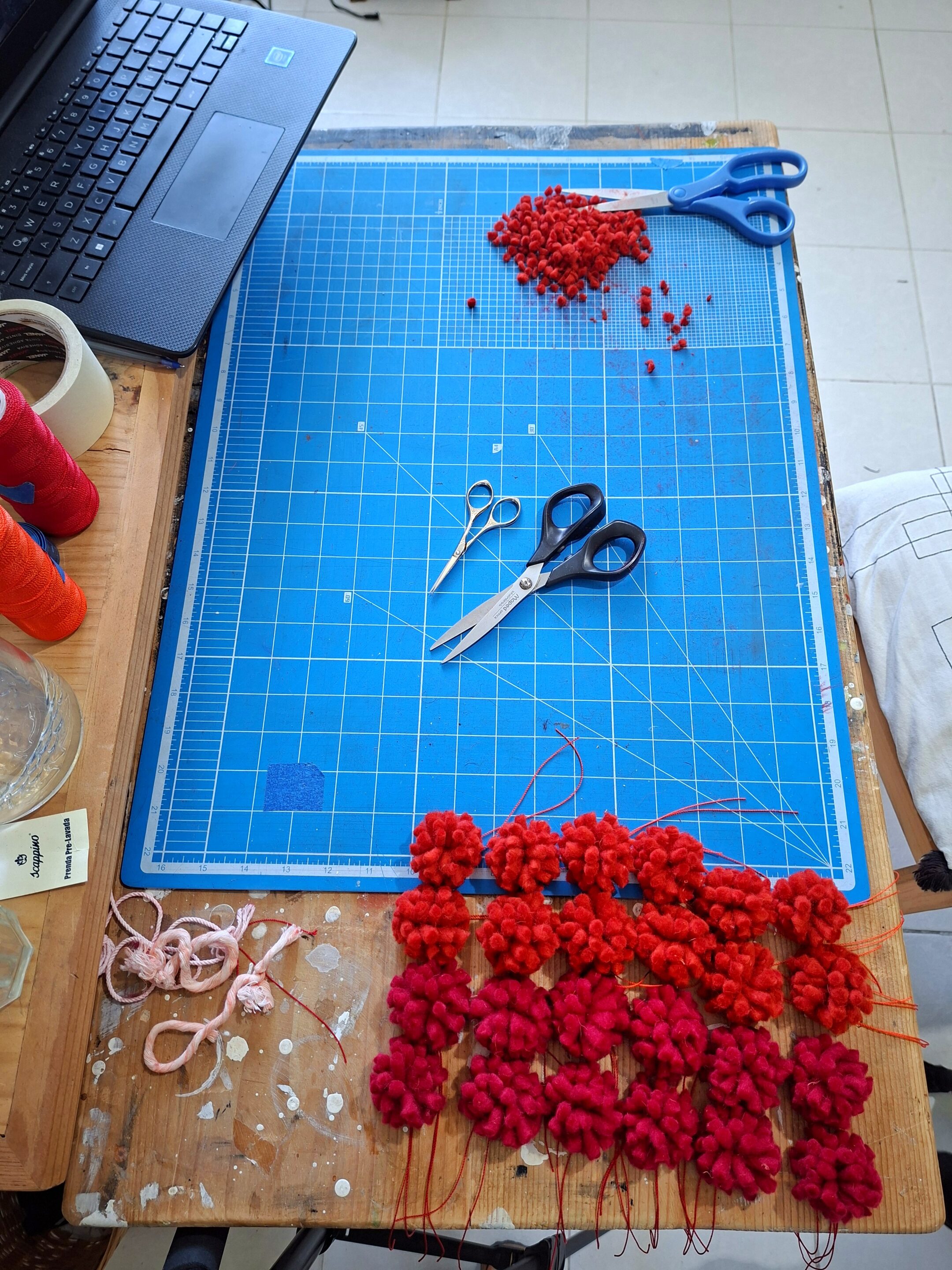
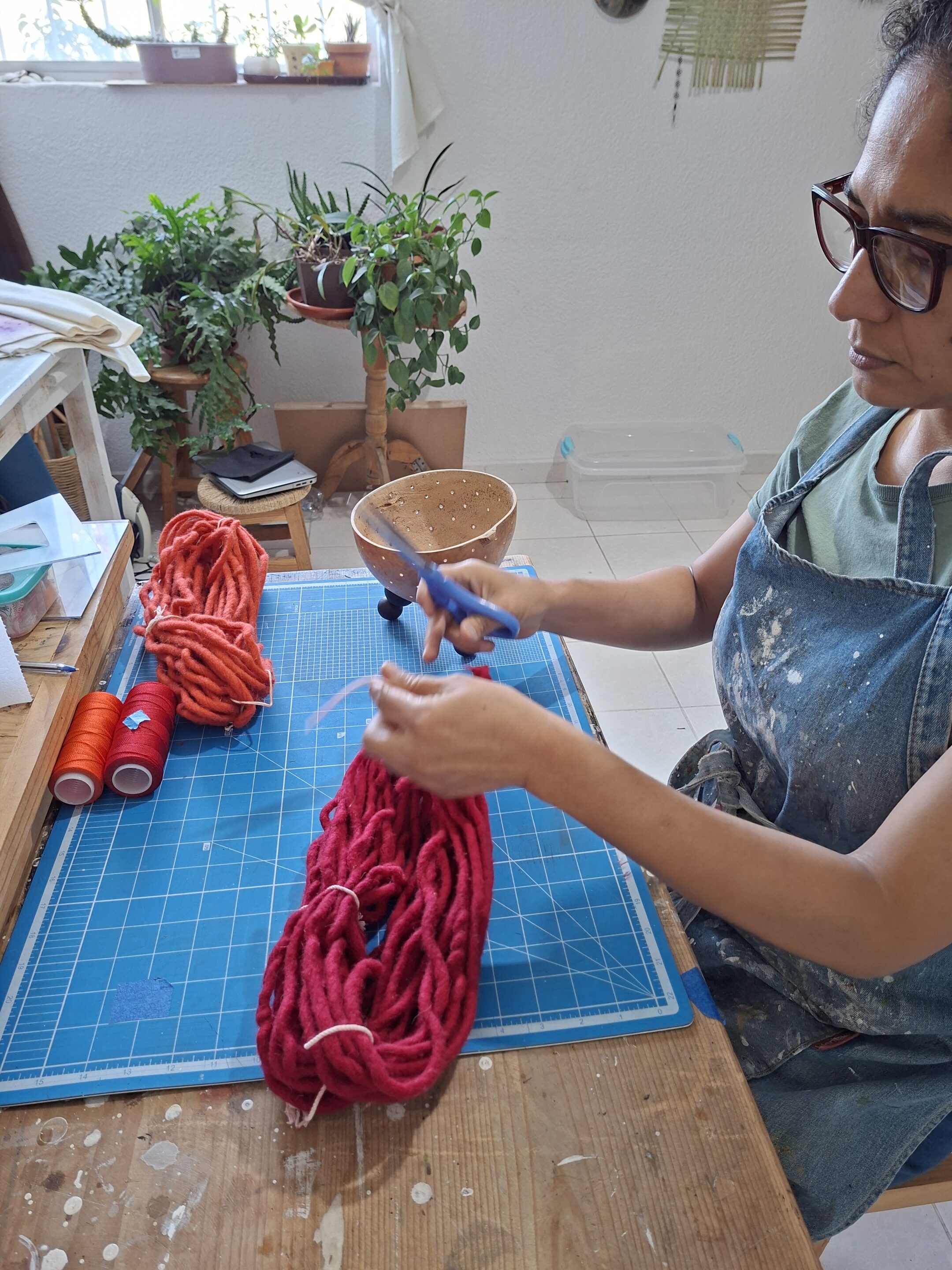
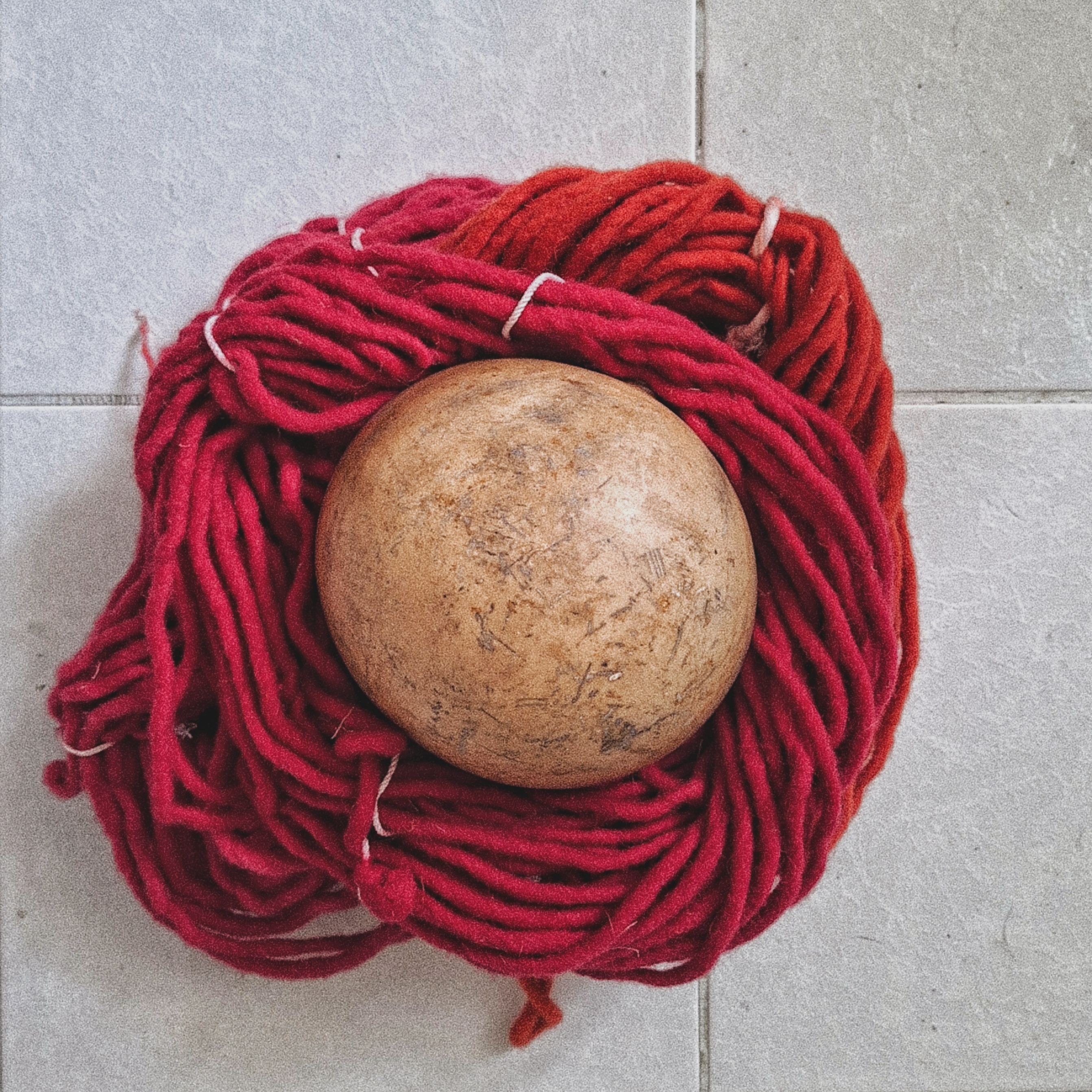
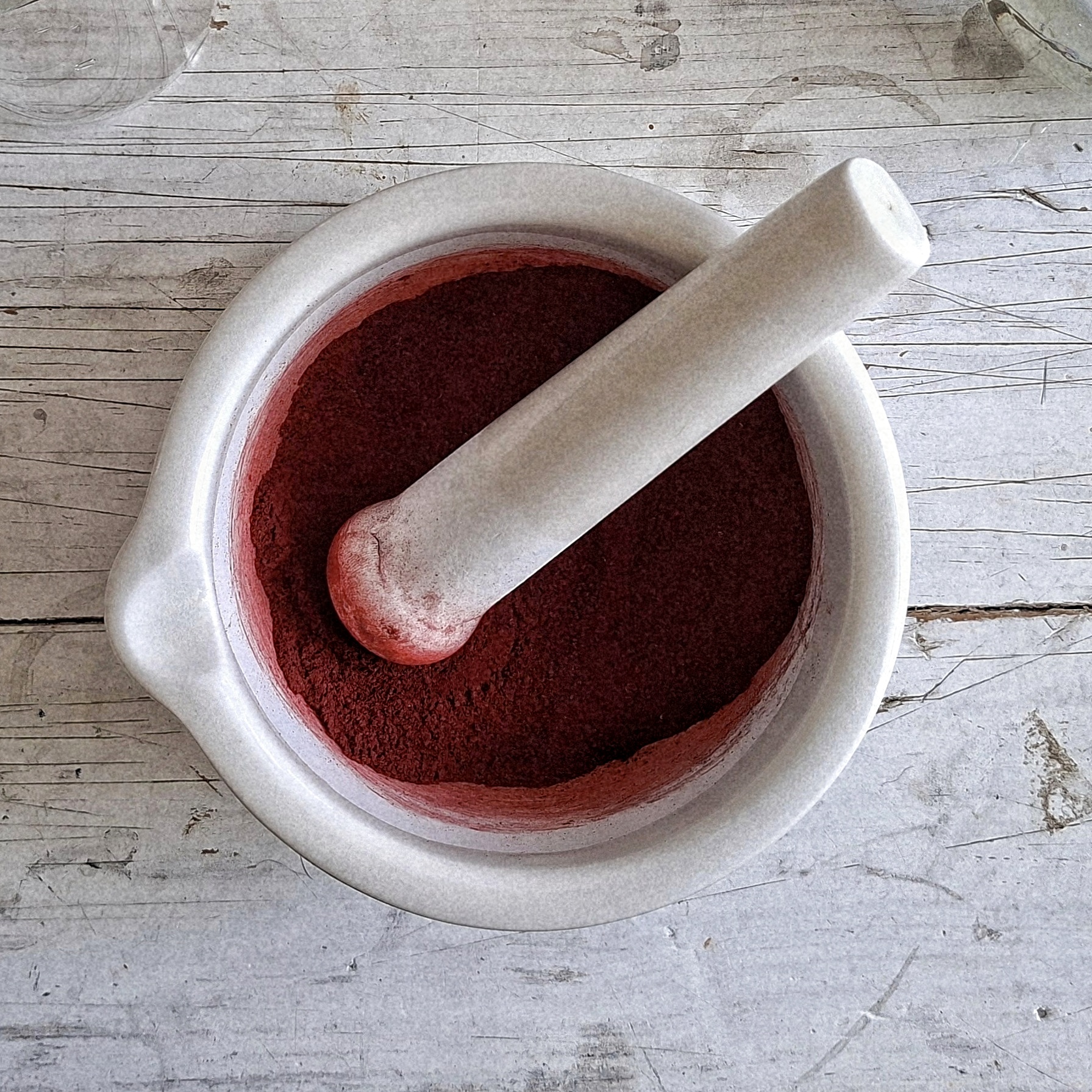
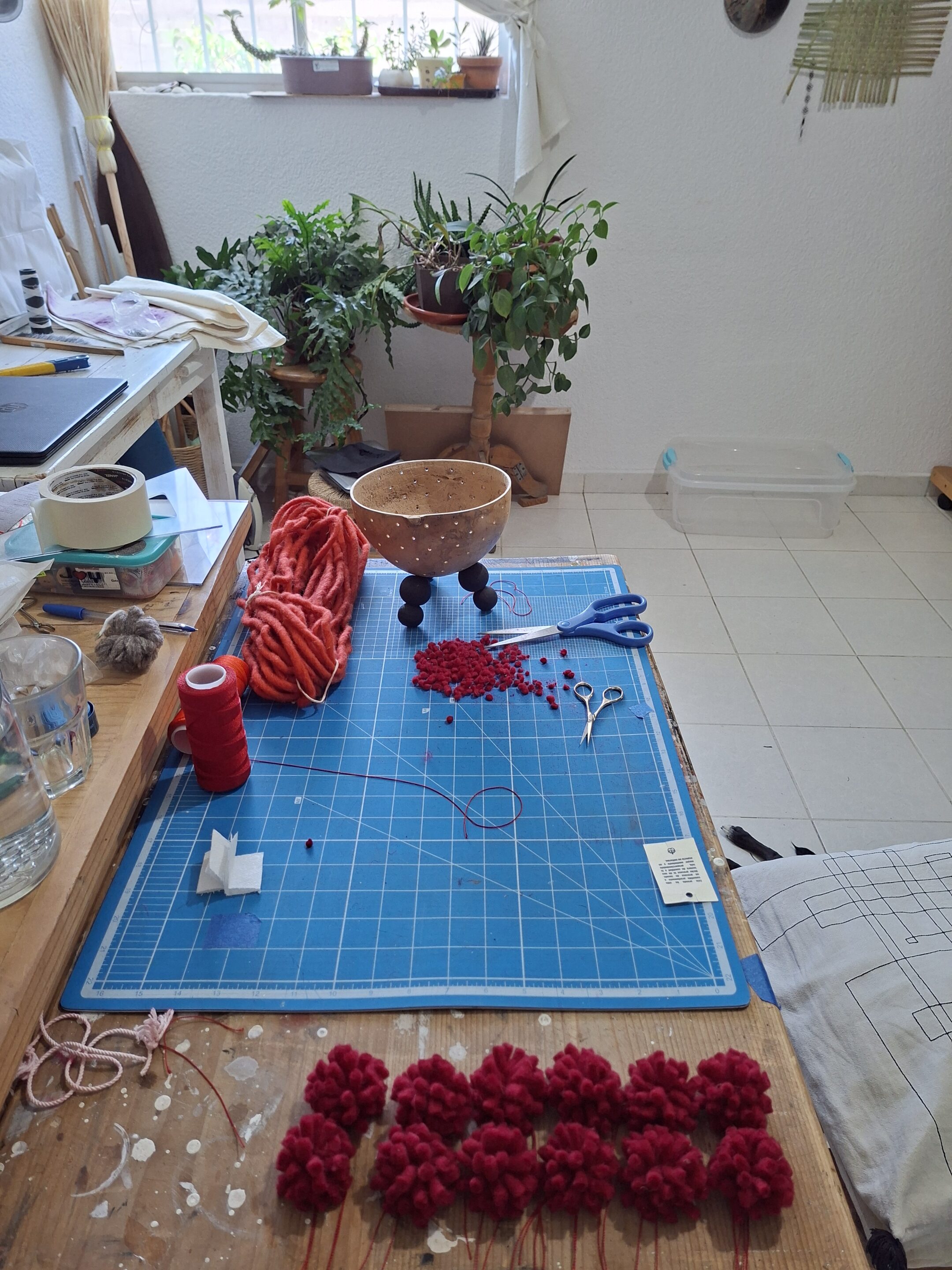
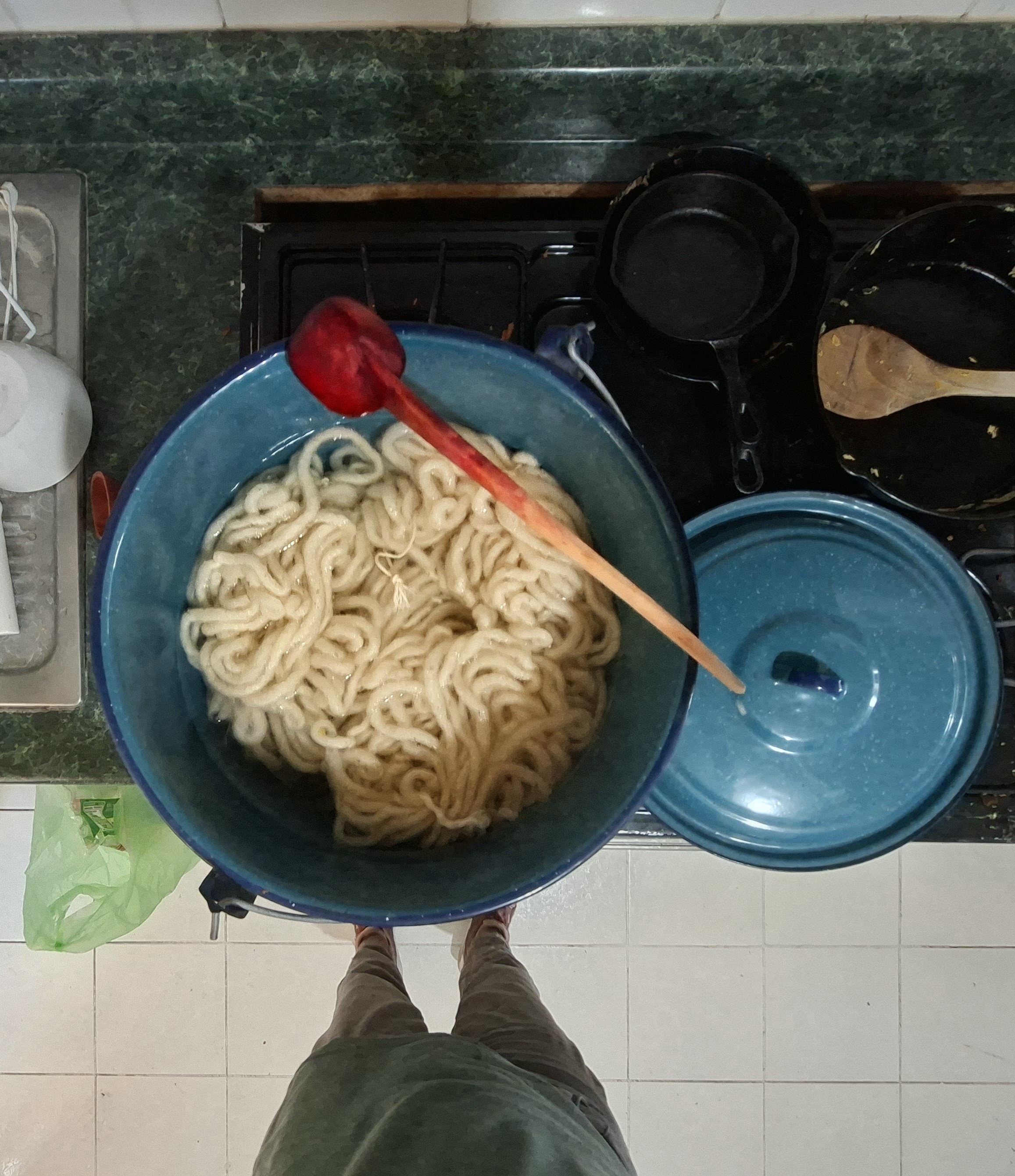
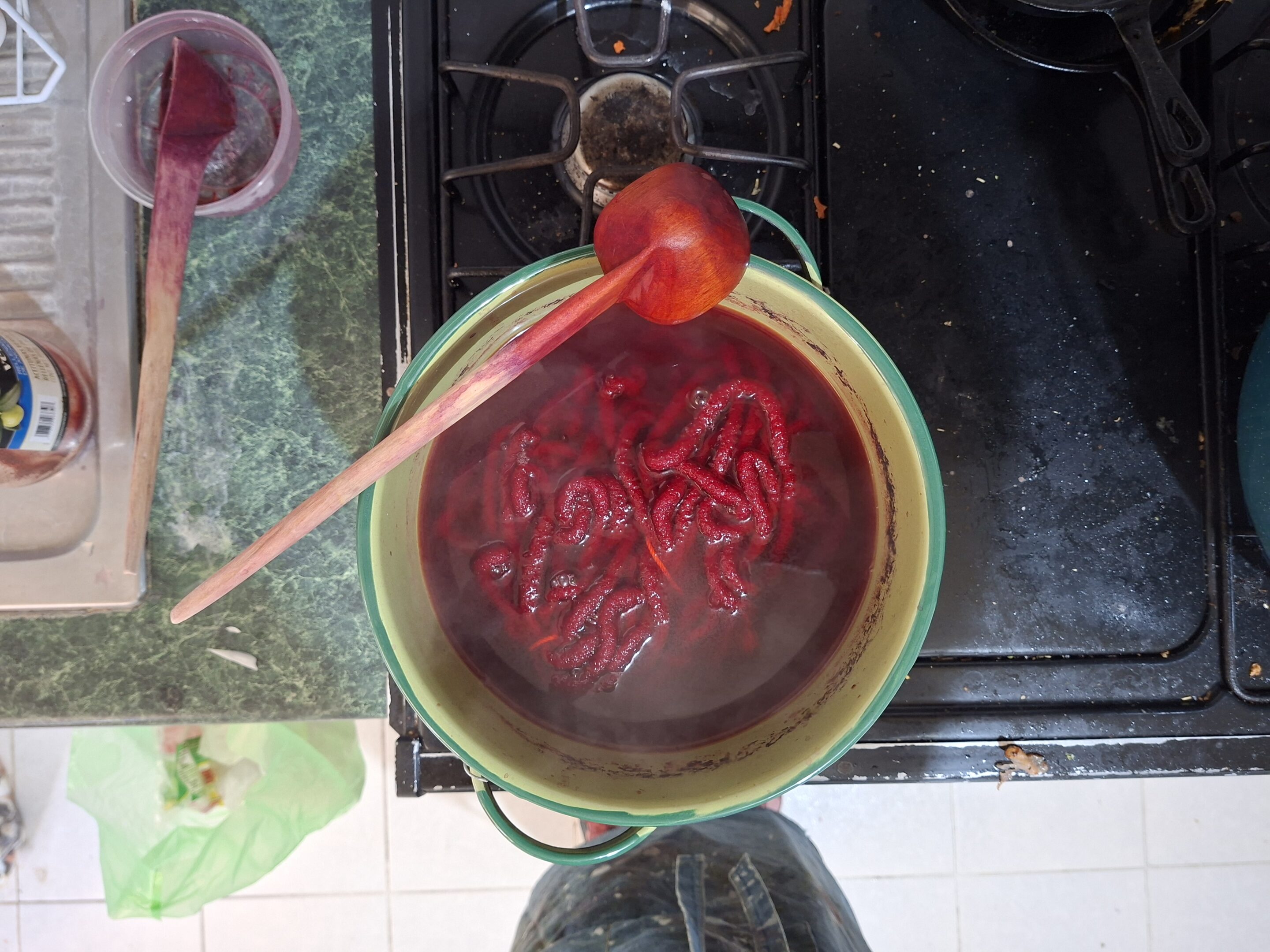
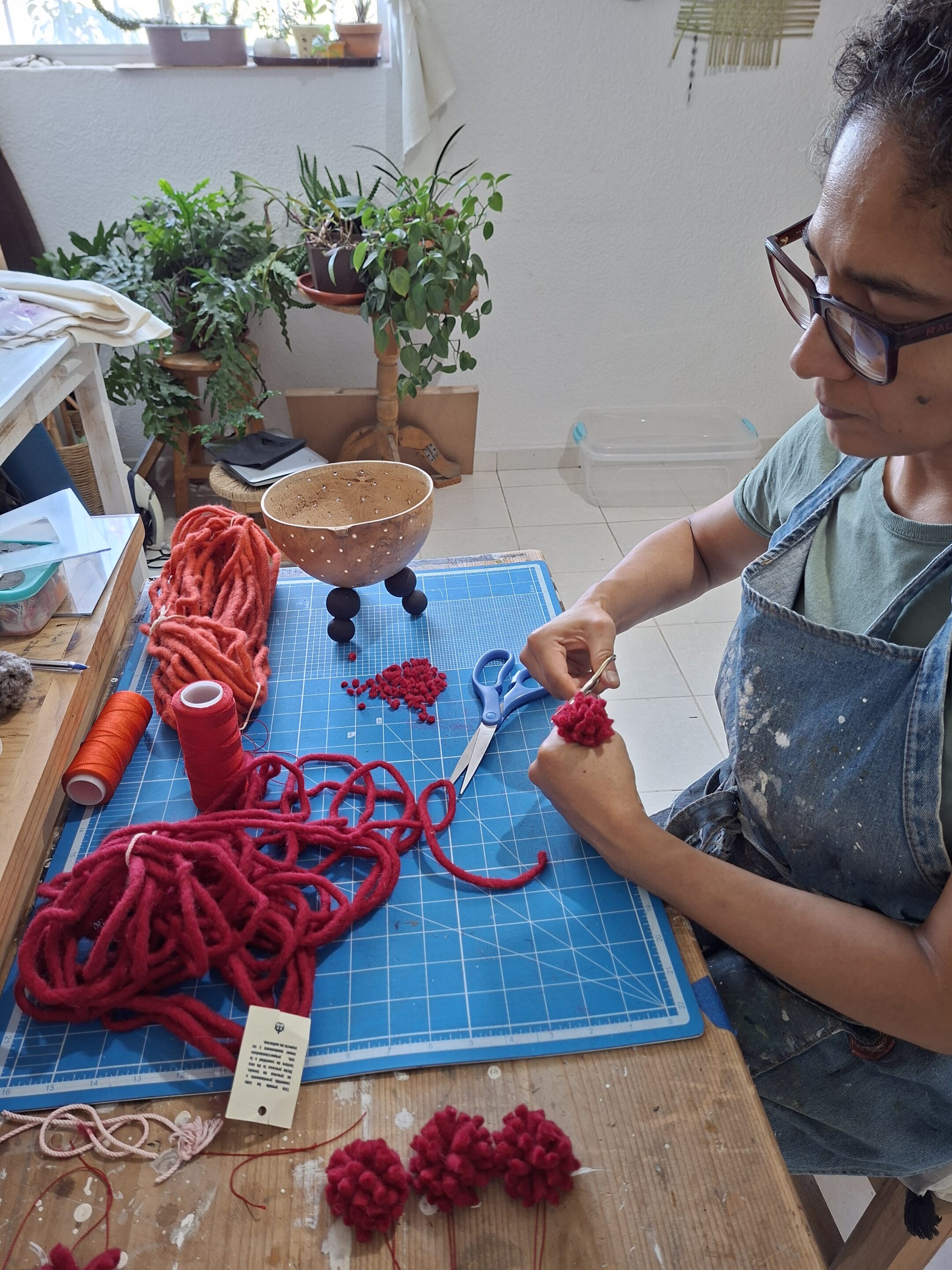
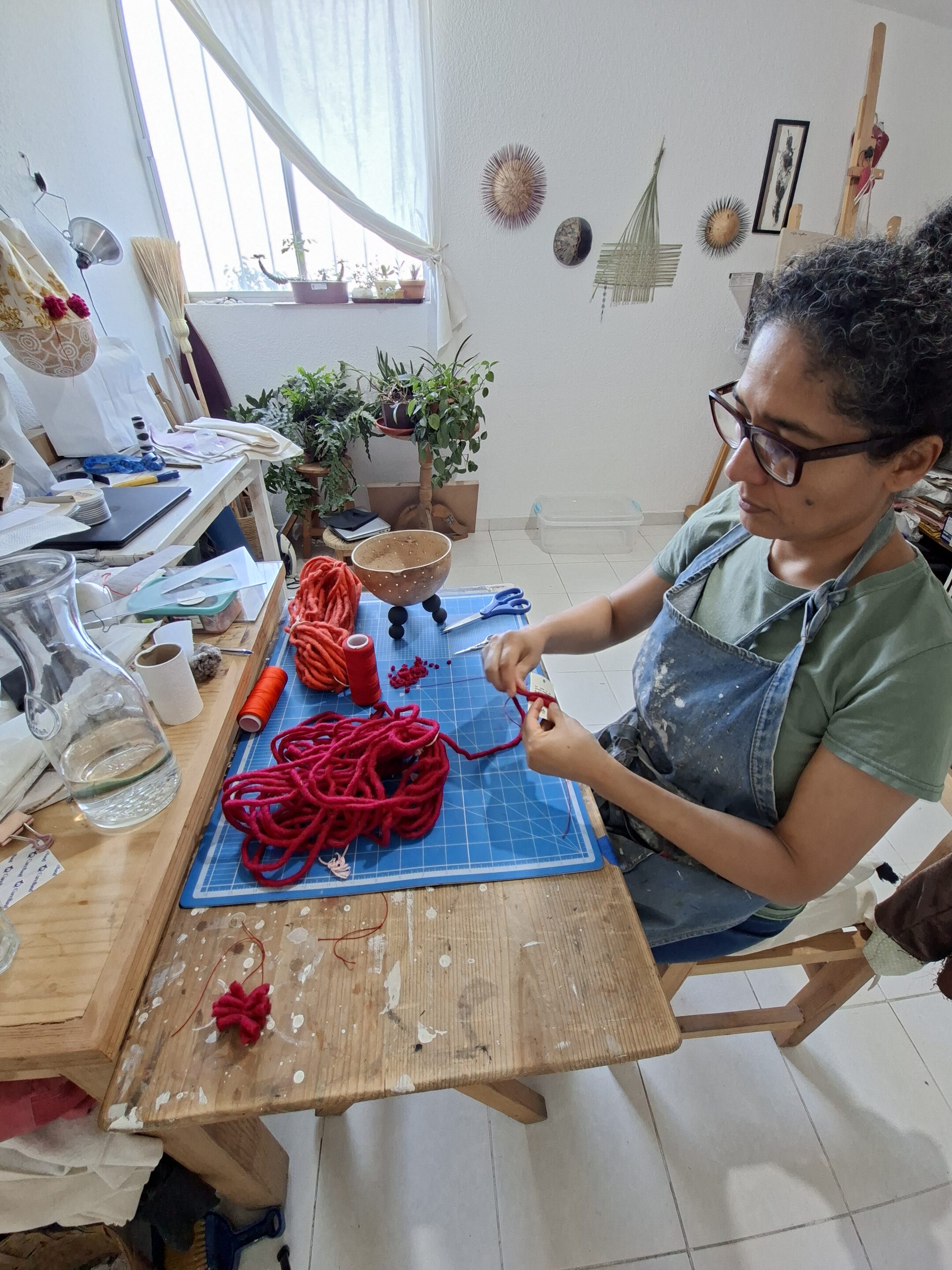
I also saw her dye wool and cord with cochineal, that red drawn from the tiniest of insects, and make pompoms that look like flowers that will never wilt. Then she joined the jícaras to cloth, gave them handles, and left them ready to go out into the street on the shoulders of other women.
I like to think the jícaras are still doing the work they have always done: holding. Water and maize before; now whatever each woman decides to carry with her through the day.
If you ever pass by where the morros grow, look at them a moment. Their fruits look like me, but they are luckier: your hands can reach them.
Process
For Colaboración 62 we present “Where the Flowers Grow,” a collection of gourd bags by Oaxacan artist Argelia Matus.
Argelia was born in 1978 in San Francisco Ixhuatán, in the Isthmus of Tehuantepec, and studied Fine Arts at the Escuela de Bellas Artes in Oaxaca. She works across painting, printmaking, textile experimentation and the design of utilitarian objects, with memory and identity as constant concerns. Her work has appeared in group shows at a range of venues, and she has had eight solo exhibitions.
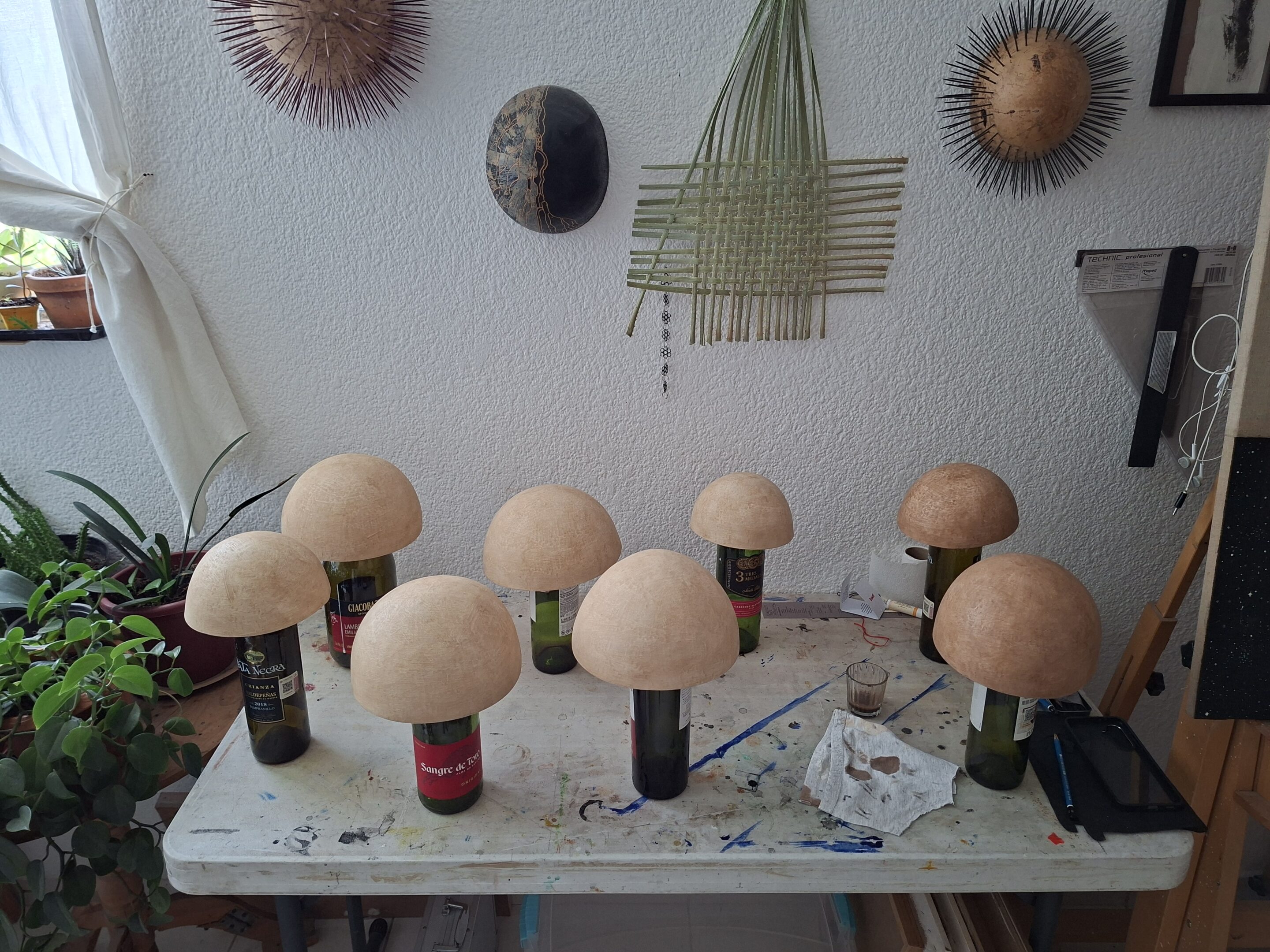
Seventeen years ago she founded her namesake brand around a single material: the jícara, the fruit of Crescentia cujete, a tree that grows in southern and southeastern Mexico and across much of Central and South America. Used as a bowl, a plate, a spoon or a cup, the jícara has been a fixture of the region’s kitchens for centuries, and comes in a wide range of shapes and sizes. Argelia knew it first through that everyday use, and the project grew out of it: she wanted, in her words, “to celebrate a household object that was part of daily life in my grandmothers’ and my mother’s homes.”
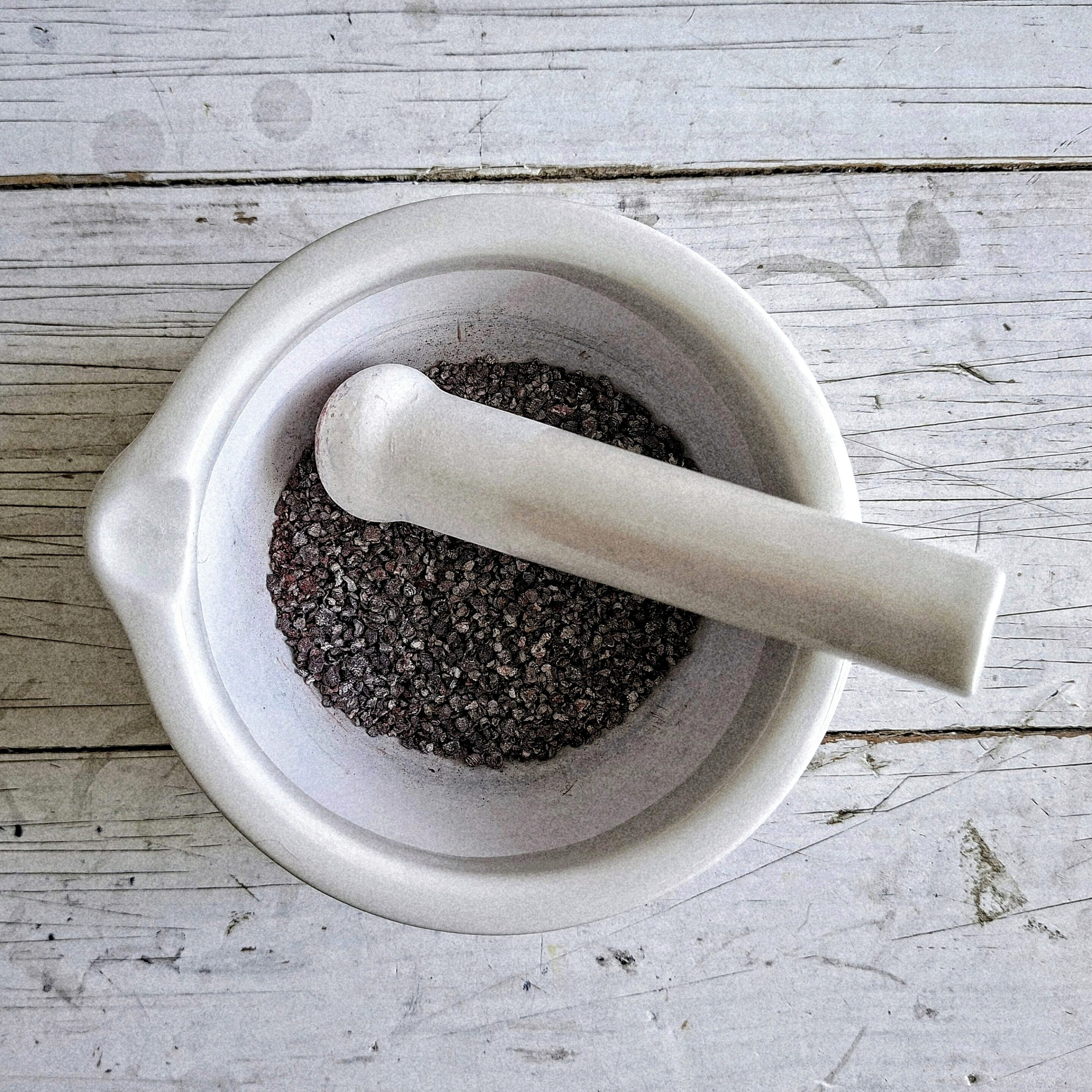
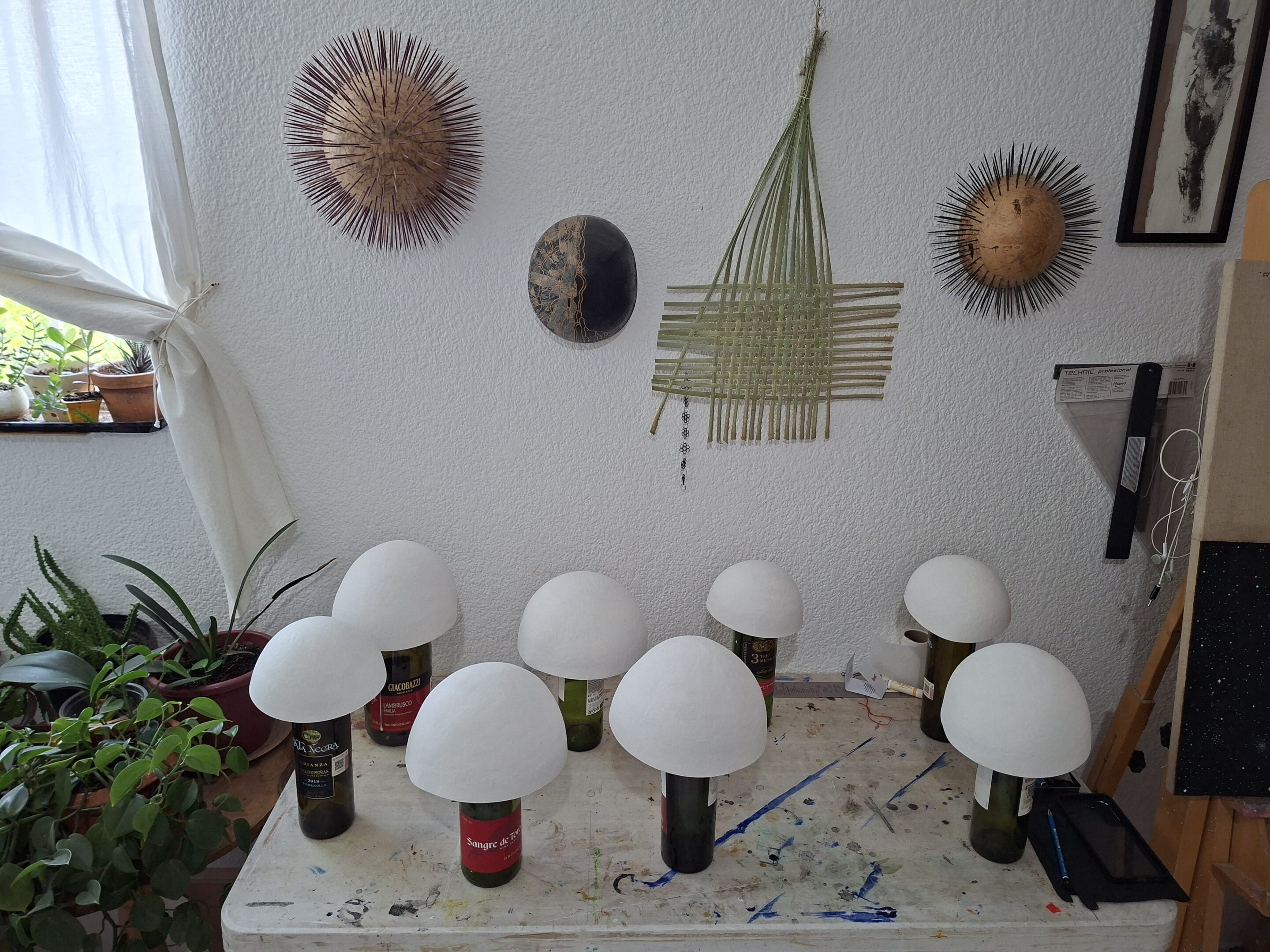
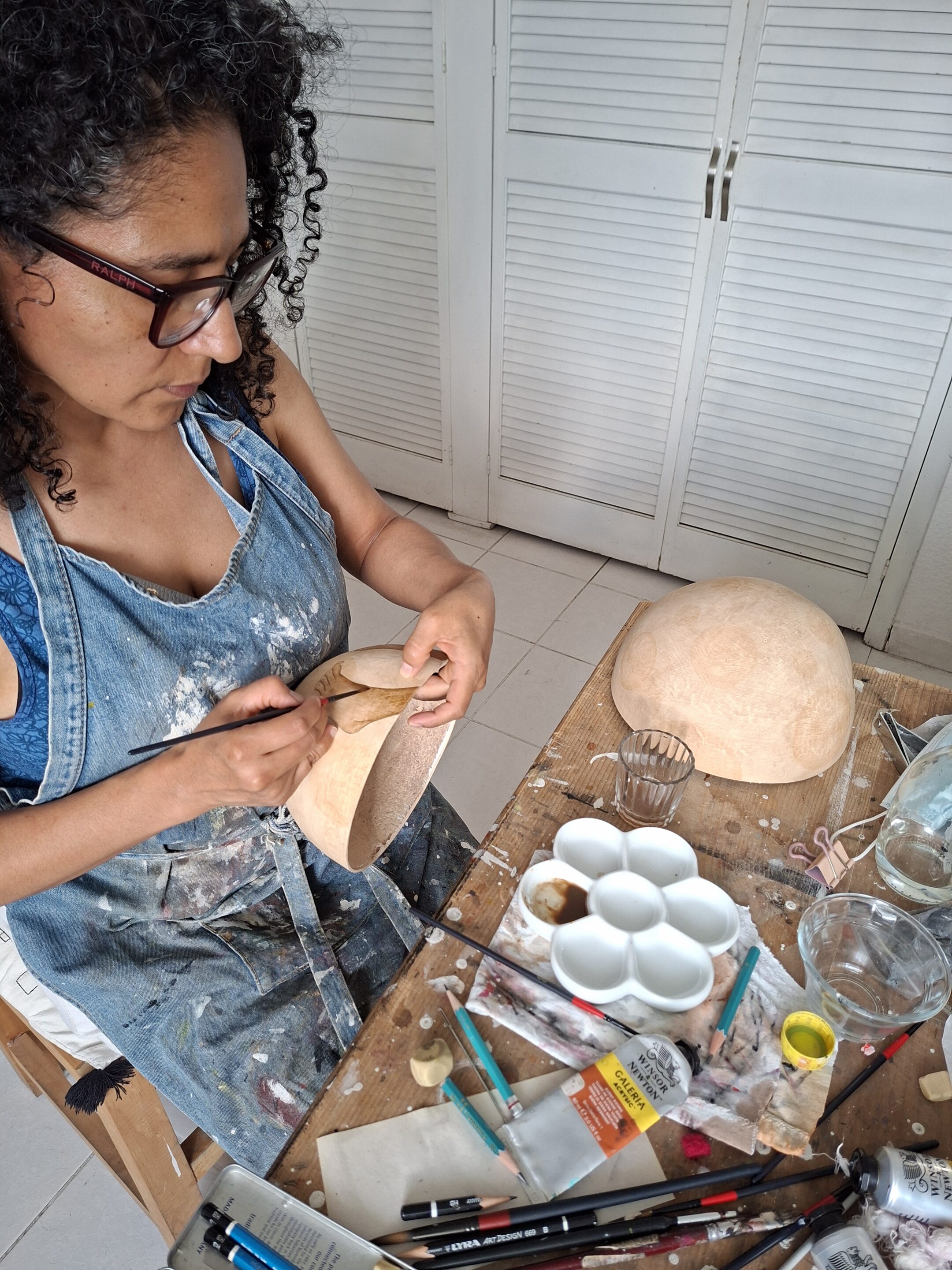
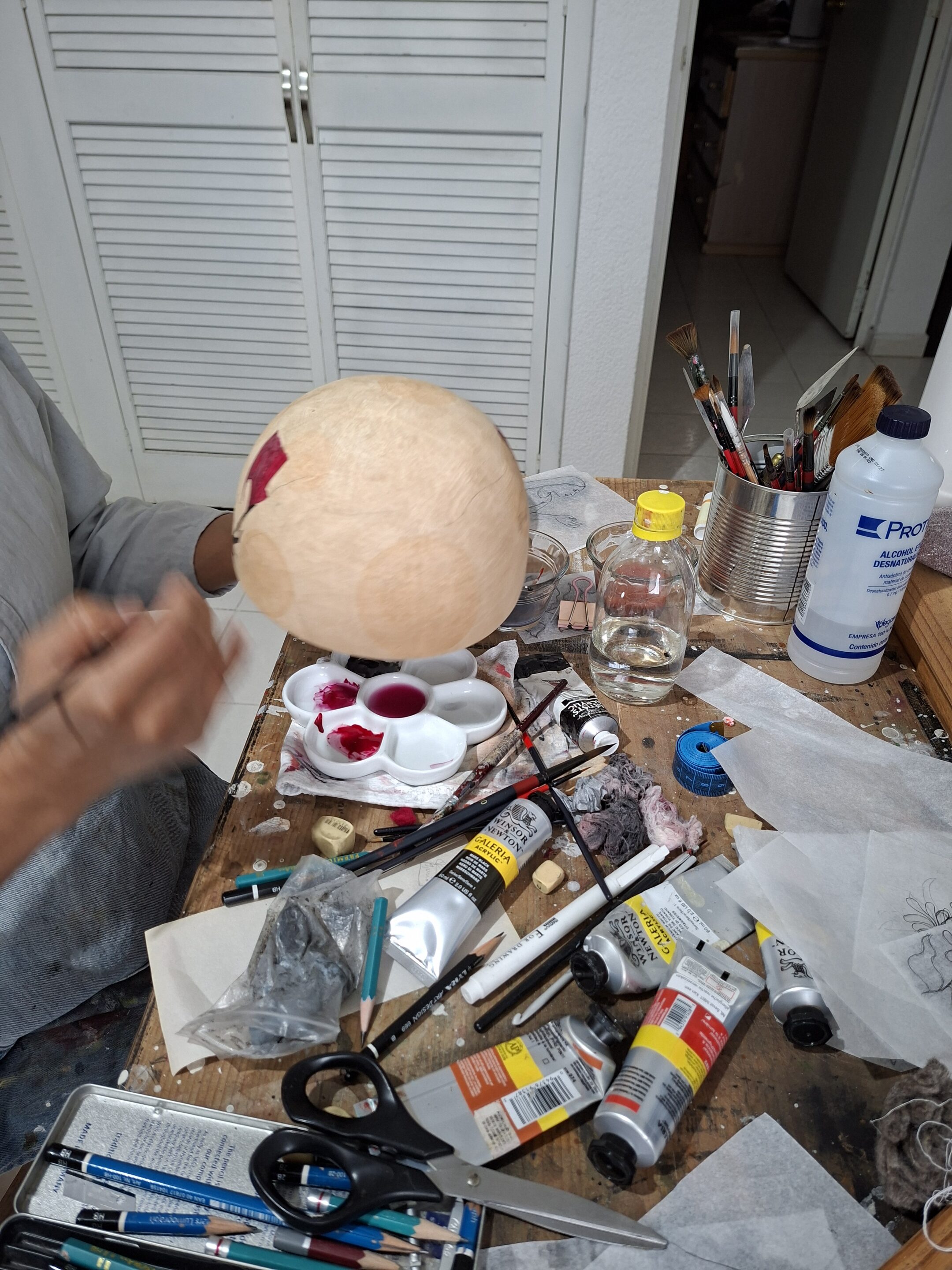
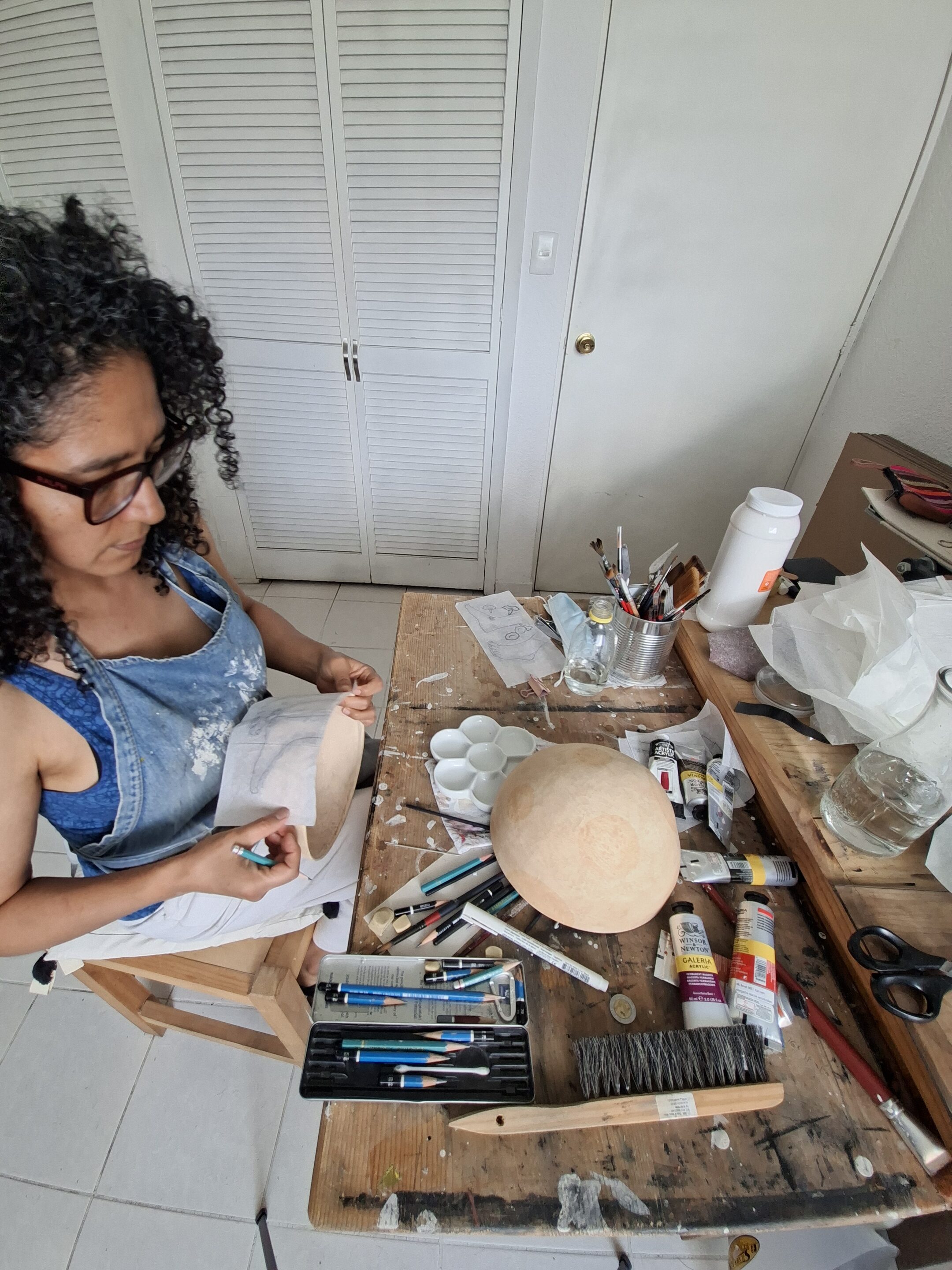
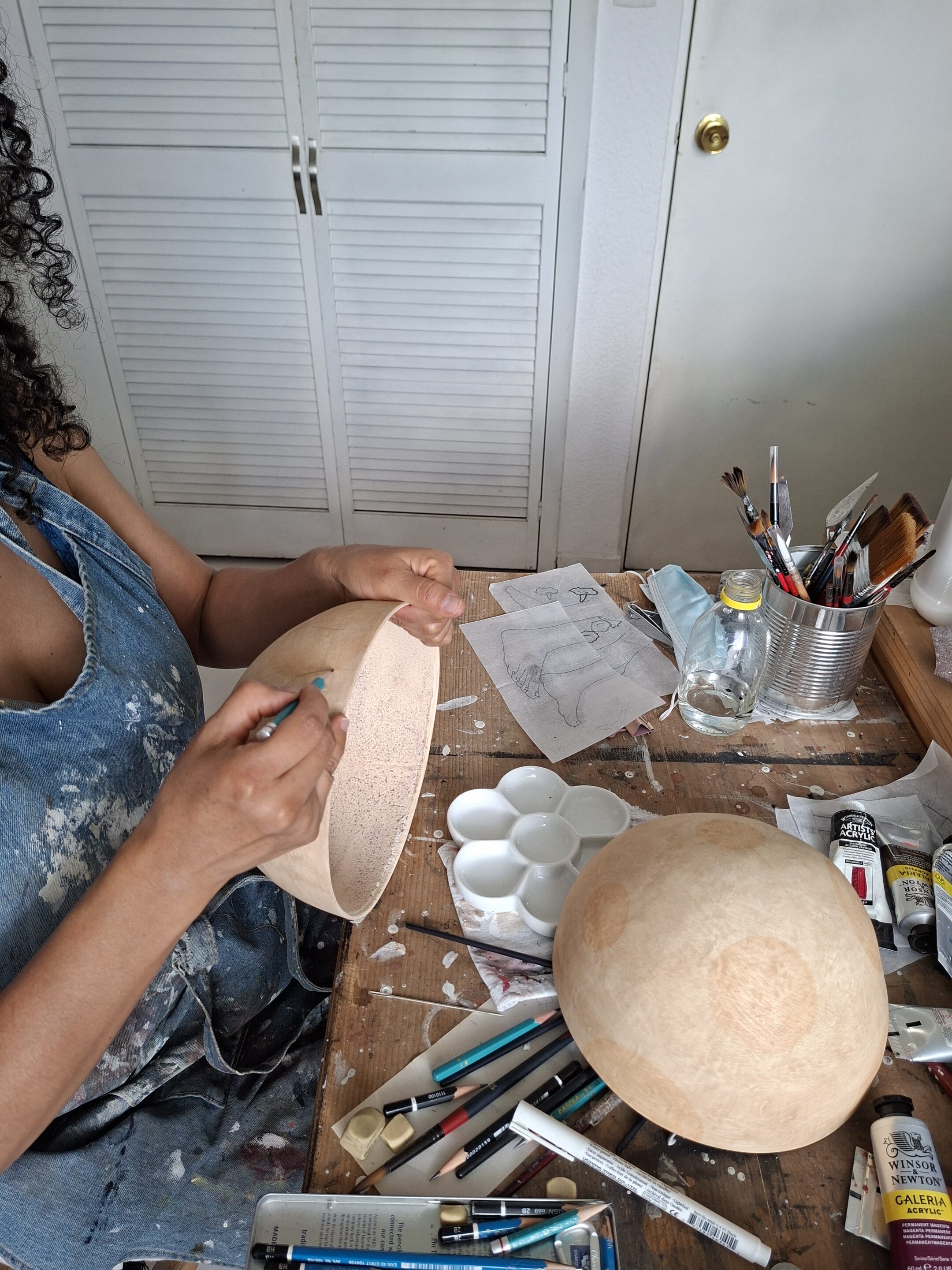
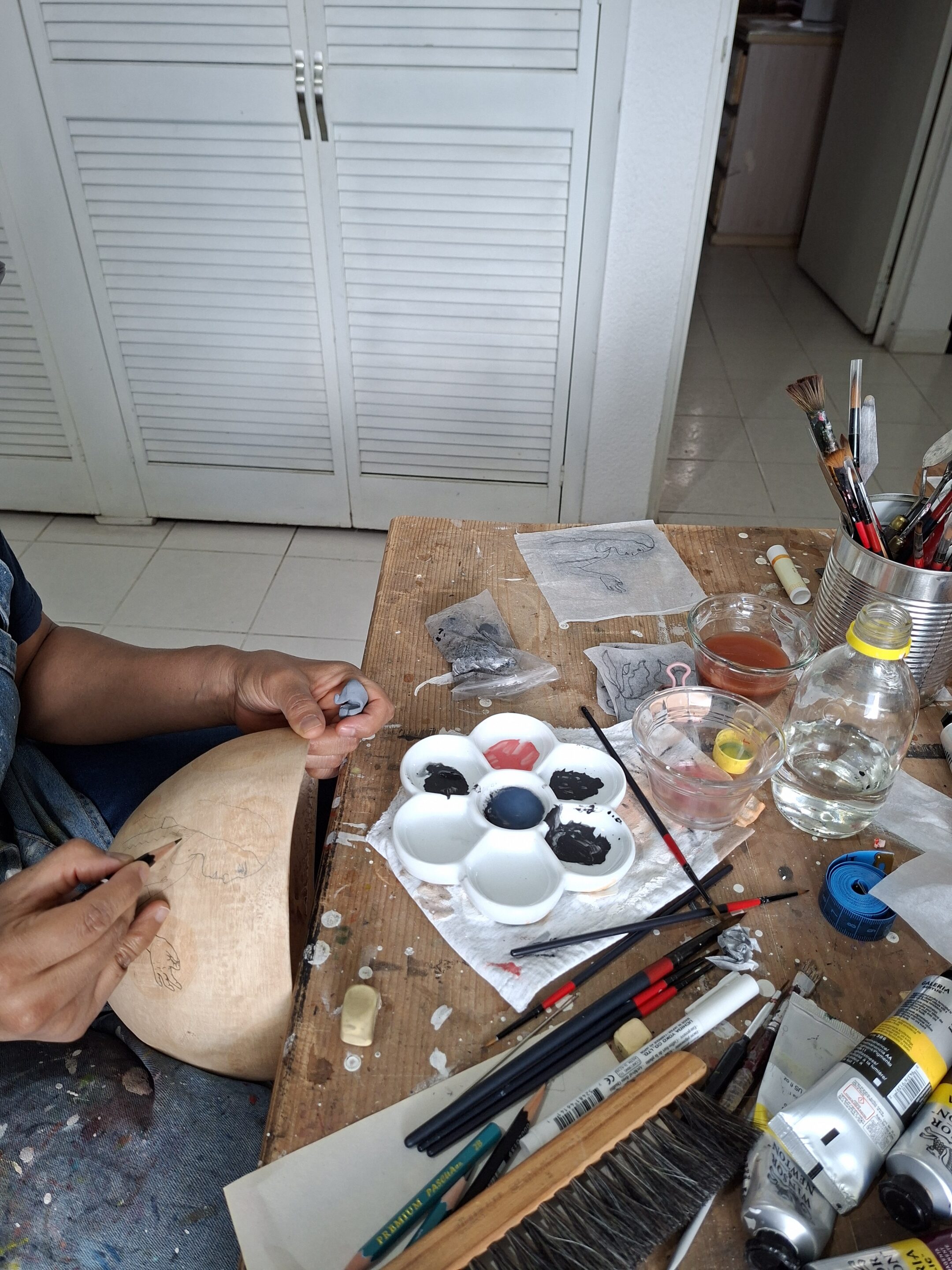
The idea is a simple one: keep the jícara’s calling as a vessel and carry it into another object made to be used, the bag. Each piece begins with a different fruit, chosen for its shape and size, which Argelia paints by hand in acrylic and seals with varnish. The jícara becomes the base of the bag and is joined to a body of raw cotton canvas lined with muslin. Depending on the model, the handles are either cotton webbing or drawstrings of twine, and some pieces carry natural wool pompoms or cords dyed with cochineal, the dye taken from an insect that lives on prickly pear and has given Oaxaca its reds and oranges since long before the Spanish arrived.
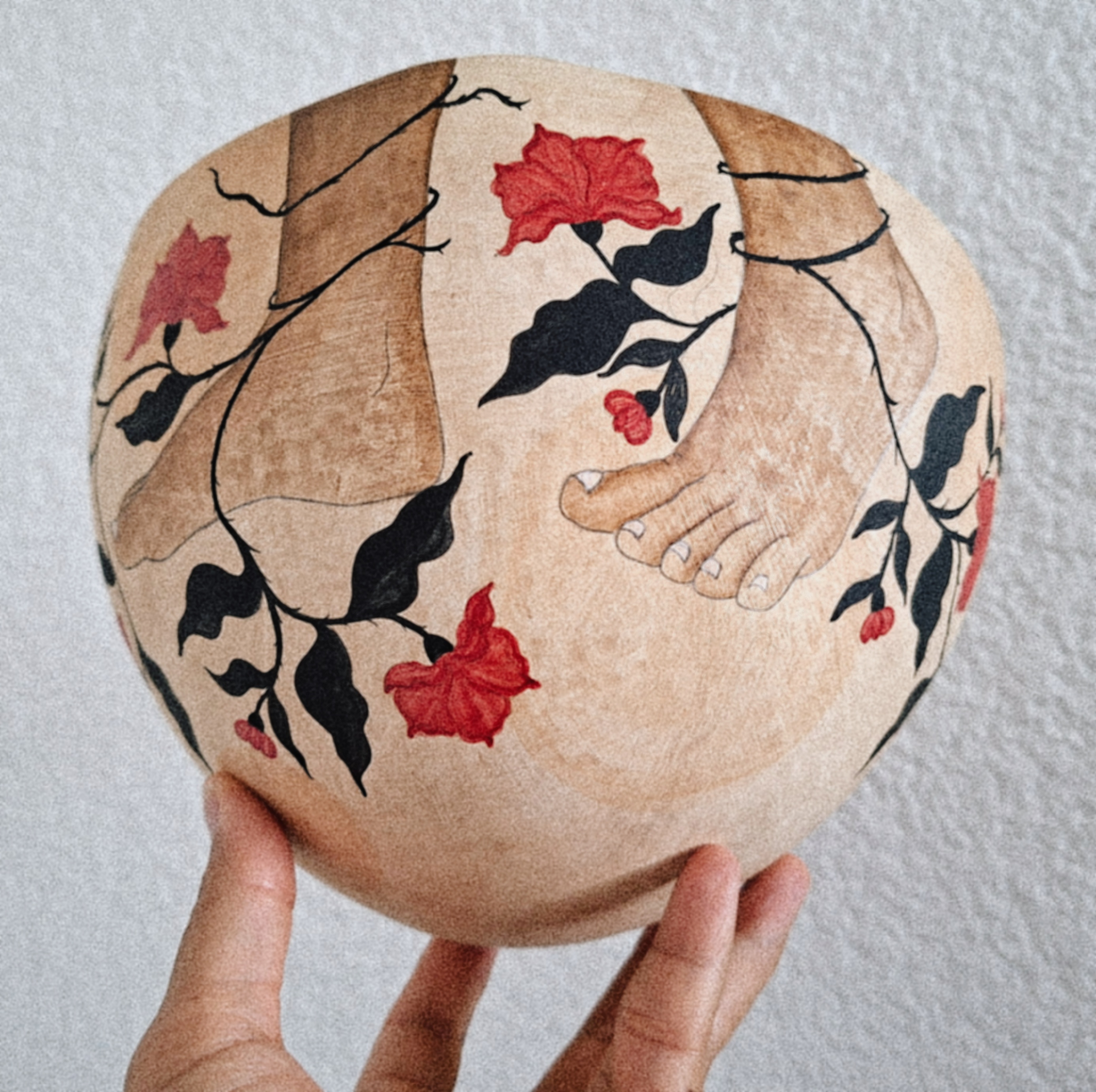
The painted motifs come from the repertoire that feeds all of Argelia’s work: birds, thread, hands, night, the sea, women, poetry, the sounds of the natural world. In this series, flowers are the through line. There are gourds covered in black flowers on an orange ground, long-haired women holding a flower among the branches of a forest, bare feet walking through red flowers.
Every bag is one of a kind, made by hand in Oaxaca. Like any object of natural origin, the jícara asks for simple care: keep it from knocks and falls, and clean it with a soft, barely damp cloth.
With Colaboración 62 we go on doing what we love most: standing alongside the people who work with the materials of their own land and find new uses for them without erasing their history.
Collaborators
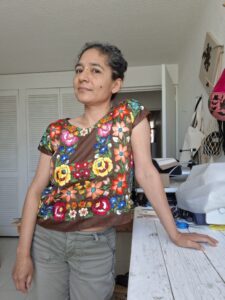
ARGELIA MATUS
Argelia Matus (San Francisco Ixhuatán, Oaxaca, 1978) studied Fine Arts at the Escuela de Bellas Artes in Oaxaca. Her work spans painting, printmaking, textile experimentation, and the design of everyday objects made with morro gourds. She founded her namesake brand seventeen years ago, has shown in group exhibitions, and has had eight solo shows.
Shop the collection
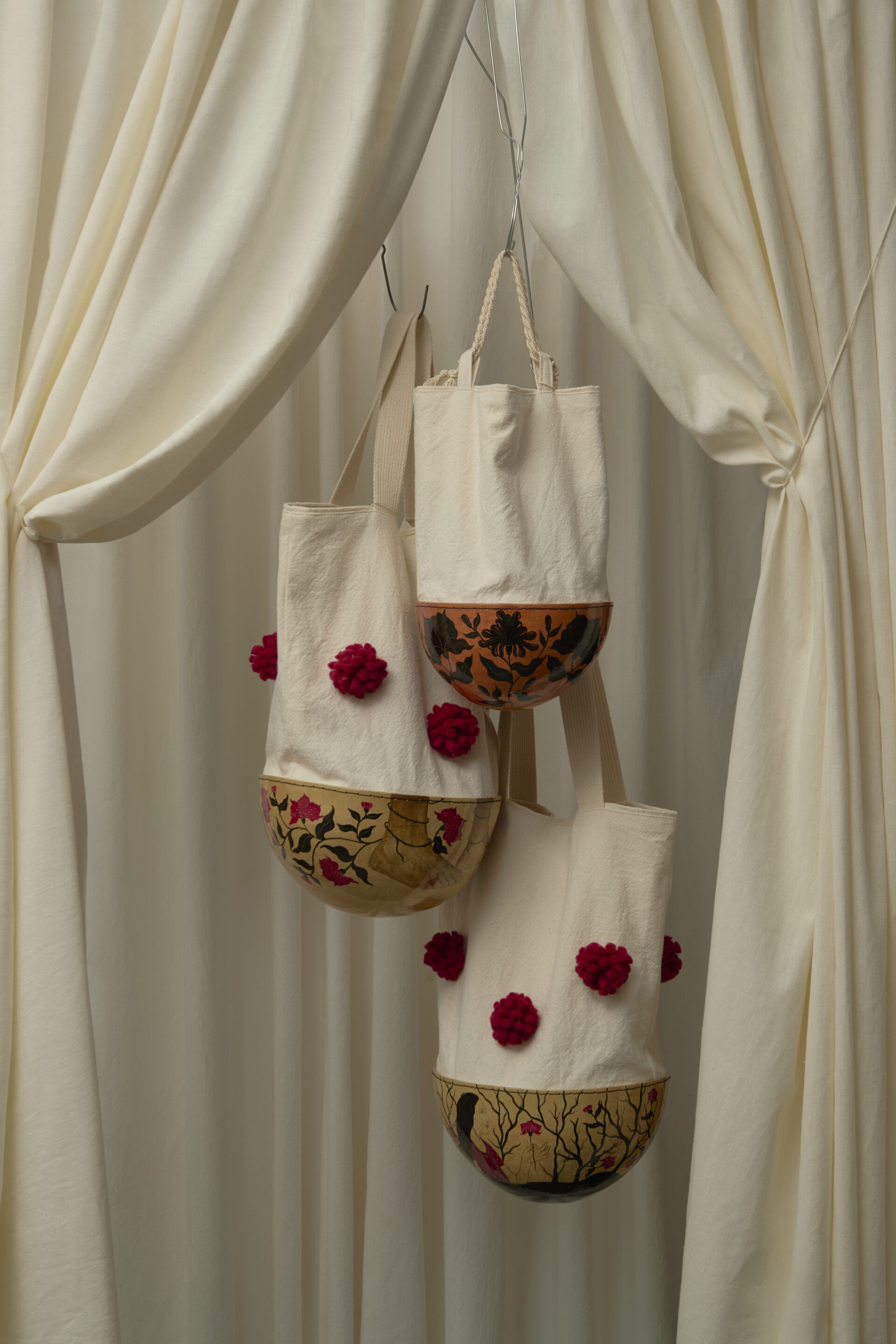
ARGELIA MATUS WHERE THE FLOWERS GROW
Jícara Bags
In this collaboration, we present the work of Argelia Matus, an artist from Oaxaca who transforms the jícara, a fruit deeply connected to the everyday life and traditions of Mexico, into pieces that tell stories.
Each bag is one of a kind, entirely handmade. Every jícara is hand-painted by Argelia with scenes of women, flowers, roots, and elements of nature. They are then combined with cotton bags, natural dyes such as cochineal, and finished with the same care and attention.
Each piece celebrates craftsmanship, natural materials, and the time it takes to make things with care. They are objects to use, care for, and keep, carrying with them the memory of a place, the beauty of handmade work, the work of an artist who keeps a traditional craft alive, and a heart that beats behind every stitch, offering a deeply personal perspective.
Every piece is one of a kind and was handmade in Oaxaca, Mexico.
Nosotros Tienda Colaboración actual Términos y condiciones
© Loona | Todos los derechos reservados | info@loonauniverse.com